A dog gets hit on a busy road. Within a minute there’s a small crowd around her. Someone pours water. Someone else calls a friend who “knows someone”. Most people just stand there, because honestly, what are you supposed to do?
Some version of that scene plays out in India every day. Puppies left in a carton outside a market. A cat limping around on an infected leg for a week. An old pet let go because the family is moving and the new flat “doesn’t allow dogs”.
Kind people do step in. But getting an injured animal through the next few weeks takes trained hands, a vet, transport, money and somewhere safe to heal. That’s the gap animal welfare NGOs fill, and their work goes a lot further than picking animals up off the street.
So what exactly is an animal welfare NGO?
It’s a non-profit that works to stop animals suffering from injury, illness, neglect, cruelty or abandonment. What each one does depends on its mission. Some run shelters. Some treat street animals where they live. Others focus on wildlife, legal cases or sterilisation drives.
Put simply, they step in for animals who have no one else.
In Delhi, Kannan Animal Welfare (KAW) is one of them. It rescues and treats injured and abandoned animals, and keeps caring for many of them long after the rescue is over.
Why India Needs them so much
Walk down any street here and you’re sharing it with animals. Dogs asleep outside shops, cats under parked cars, cows near the divider. Most of them are fine where they are and don’t need “rescuing” at all.
The trouble starts when one gets hurt, falls sick or gets dumped somewhere it can’t survive. Vet care is expensive. Most people don’t know how to safely lift a dog in pain. And municipal animal services vary a lot from city to city.
NGOs plug that gap, and their work touches public health in ways people don’t always notice. The World Health Organization says vaccinating at least 70% of dogs in an area is a key target for controlling dog-mediated rabies. Every dog an NGO vaccinates moves a neighbourhood a little closer to that number.
What these NGOs actually do
Rescue when it’s an emergency
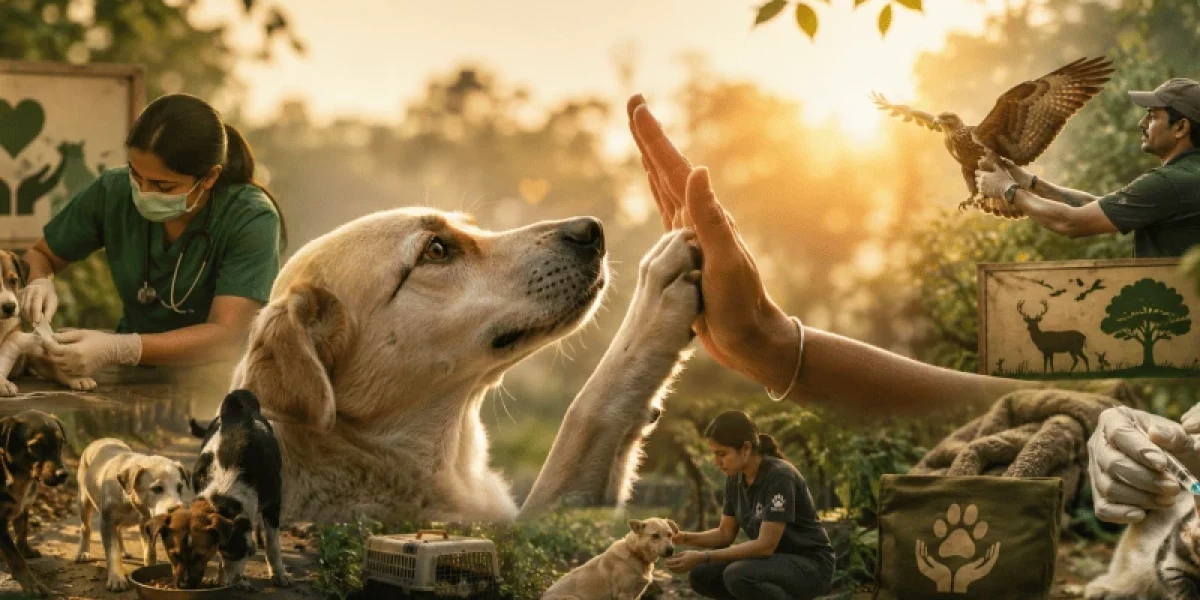
For a badly injured animal, the first few hours matter. A dog hit by a vehicle can be bleeding internally even if she’s standing. In Indian heat, an untreated wound can fill with maggots within days. Rescue teams handle the parts most of us can’t: safe handling, transport and getting the animal in front of a vet quickly.
Not every street dog needs help, of course. A healthy dog napping in the sun is just napping, and knowing the difference is part of the job.
At KAW, rescue operations and medical treatment are the core of its work across Delhi NCR. If you’re ever first on the scene, it’s worth reading up on the common mistakes people make around injured animals before you need to.
Treatment that carries on after the rescue
The rescue photo goes on Instagram. The next six weeks don’t.
A dog with a broken leg might need an X-ray, surgery, a splint, painkillers and weeks of being kept still. A wound might need dressing every day. Skip the follow-up and even a successful rescue can end badly. Most of an NGO’s real effort goes into this slow, unglamorous recovery process.
Food, water and somewhere safe
An animal recovering from surgery needs proper meals, clean water and a place to rest without being chased off. Shelters and street feeding programmes cover that.
A good shelter isn’t about taking in as many animals as possible, though. Overcrowding spreads disease fast, and for healthy street dogs, care within their own community often works better.
Rehabilitation
Some animals can’t go straight back out after treatment. One dog might need a few weeks’ rest after surgery. A frightened one might need a quiet corner and a lot of patience before trusting people again. A paralysed dog may need help for the rest of its life.
Afterwards, some animals return to their old area, some get adopted, and a few stay on permanently in sanctuary care. It depends entirely on the animal.
Sterilisation and vaccination
Rescue deals with suffering that’s already happened. Prevention cuts down on what’s coming. Done properly, spay and neuter programmes manage dog numbers humanely over time, and vaccinating street dogs protects them and the people around them from rabies.
The World Organisation for Animal Health backs exactly this kind of joined-up approach, where animal health, human safety, responsible ownership and community involvement work together.
Finding homes
Some animals simply can’t go back where they came from. NGOs match abandoned pets, puppies and recovered dogs with people who are ready for the commitment.
A good adoption process asks questions. Do you have the time and the space? Have you thought about vet bills? A dog can easily live into its teens, so adoption shouldn’t be an impulse decision. KAW’s first-time adoption checklist is a sensible place to start, and you can see who’s waiting on the adopt a dog page.
Teaching people how to live alongside animals
A lot of street-animal problems get worse because of fear or bad information. People don’t know how to behave around an unfamiliar dog, can’t tell when one is sick, or don’t realise how important rabies shots are. NGOs run awareness work on safe behaviour around dogs, what to do after a bite, and why some street dogs act aggressively in the first place.
How the community benefits too
This is the bit people miss. When a trained team takes a frightened, injured dog out of a residential lane, the dog gets treated and residents get their peace back. Nobody untrained gets bitten trying to help. Vaccination drives lower rabies risk for every family nearby, sterilisation keeps dog numbers steadier, and clear reporting channels mean fewer fights between neighbours and feeders.
It takes planning and cooperation, but when it works, everyone’s safer.
Rescue and rehabilitation aren’t the same thing
Rescue is the emergency, usually over within hours. Rehabilitation is everything after it, and can run for months. Rescue gets an animal to safety. Rehab decides what kind of life it gets next.
Why this work is so hard to keep going
Behind every rescue there’s a shelter that still needs food the next morning. Donations rise and fall, but costs don’t. Surgeries and scans eat money quickly. Older, disabled or chronically ill dogs are much harder to rehome. The daily cleaning, feeding and transport is physically exhausting. And neighbourhood arguments over community dogs can stall even simple humane solutions.
That’s why steady support matters more than a burst of donations during one viral emergency.
How KAW helps animals in need
KAW has spent more than 11 years working with animals in Delhi NCR. According to its website, it currently supports 256 resident animals and more than 200 street animals, including many that can’t be adopted or safely returned to the street.
A few of their stories show what that means. Arjun came in with a broken jaw and couldn’t eat properly. After treatment and surgery he recovered, and now lives at the KAW sanctuary. Bruce needed intensive care for a severe maggot-infested wound. He healed, but had nobody to go back to, so KAW kept him. Bala is paralysed and can’t survive on the streets, so he lives at KAW permanently.
How your donation helps
KAW publishes these estimates:
| Contribution | What it can support |
| ₹300 | A street-feeding round for about 10 dogs |
| ₹750 | About a week of food, shelter and care for a resident dog |
| ₹1,500 | Food for about 50 street dogs |
| ₹3,000 | About a month of care for one resident dog |
These aren’t fixed purchases. KAW pools donations into a common animal-care fund, and explains how donations are used on its site.
Monthly giving helps most because it’s predictable. Nobody knows when the next accident case will come in, but a steady base of support lets an NGO plan food, routine medicines and staff. You can set that up by becoming a KAW sustainer.
Donate to Kannan Animal Welfare
How to tell a genuine NGO from a doubtful one
It’s fair to ask questions before you give. A trustworthy organisation will have clear contact details, tell you which animals and areas it covers, show real cases, issue proper receipts and explain how funds are spent. Be wary of anyone making wild promises or pushing you to pay immediately without explaining much.
If you want a tax deduction, check the NGO’s Section 80G eligibility and ask for the right paperwork. KAW’s 80G tax exemption guide explains how it works.
Ways to help without money
You can volunteer, whether that’s admin, fundraising or, with training, hands-on care. You can foster a recovering dog, which frees up shelter space. Shelters always need food, bedding and cleaning supplies, and KAW keeps an Amazon wishlist of what it needs right now. You can also share verified appeals, like KAW’s current campaigns, as long as they come from official channels.
If you spot an injured animal, don’t attempt a risky rescue yourself. In KAW’s service area, WhatsApp +91 9999670042 with the exact location, photos or videos taken from a safe distance, and a line about the animal’s condition.
Quick answers
They arrange emergency treatment, run vaccination and sterilisation, provide food and shelter where needed, and help injured or abandoned dogs recover and find homes.
Not quite. A shelter is a place. An NGO is an organisation that may run a shelter alongside rescue, treatment, adoption and education work.
Donate, sponsor a meal, adopt, foster, volunteer or share verified rescue appeals.
The bottom line
A rescue might start with one phone call, but the care can go on for months, sometimes years. Some animals heal and go back to their street. Some find families. Some will always need a safe place and people looking out for them.
Animal welfare NGOs make all three possible, and make neighbourhoods safer for people along the way. You don’t need to run a shelter to be part of that.
A rescue gives an animal a chance to survive. Ongoing care gives it a chance to live well.