

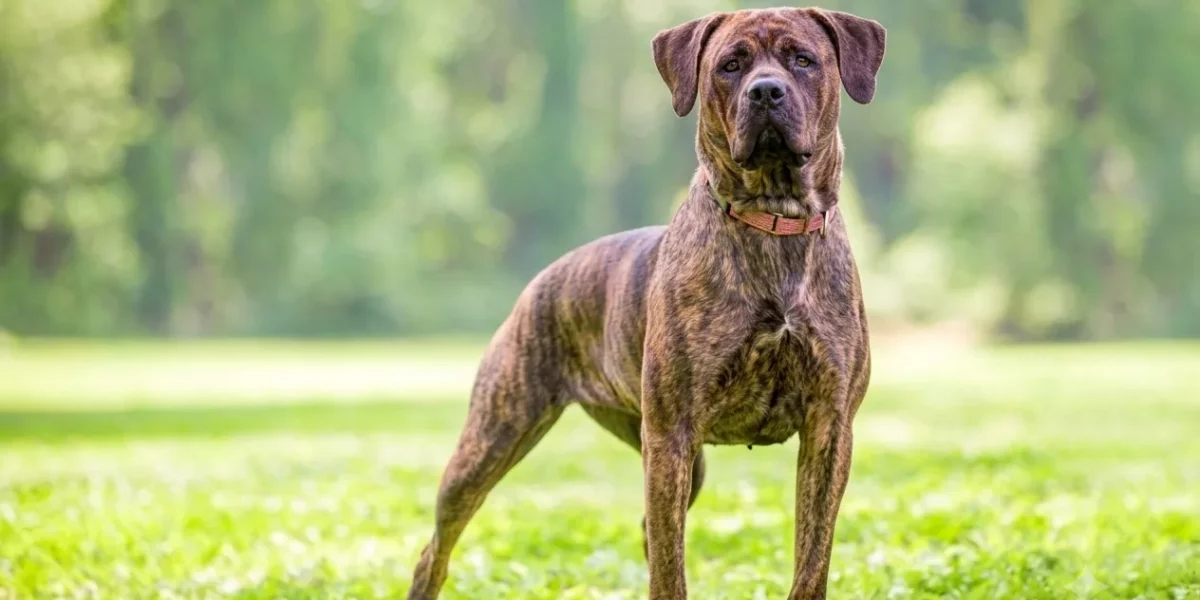
The Cane Corso is having a real moment in India. Search interest in the breed has climbed sharply over the last few years, and metro breeders in Delhi, Mumbai, and Bangalore report waitlists running into months for well-bred litters. That popularity is outrunning the information available to new owners — most pages online either give you a price table and nothing else, or a generic international breed profile that says nothing about Indian summers, apartment buildings, or local breeder quality.
This guide is built to fill that gap: what the Cane Corso actually costs in India, what it needs to survive and thrive in Indian conditions, and whether it genuinely fits your household — not just your Instagram feed.
Cane Corso at a Glance
| Feature | Details |
| Origin | Italy |
| Breed type | Working and guardian mastiff |
| Adult height | Males ~25–27.5 in (63–70 cm); Females ~23.5–26 in (58–66 cm) at the shoulder |
| Adult weight | Males ~45–50 kg; Females ~38–45 kg |
| Coat | Short, stiff, dense double coat |
| Lifespan | 9–12 years |
| Exercise needs | High — daily physical and mental work |
| India climate fit | Manageable with active heat management; not a low-effort breed here |
| Best suited for | Experienced owners with space, time, and training commitment |
What Is a Cane Corso, Really?
The Cane Corso is a mastiff-type breed from southern Italy, historically used to guard property, work livestock, and hunt boar. The name is generally translated as a variation on “bodyguard” or “protector” dog, which tells you most of what you need to know about its instincts before you’ve even met one.
It’s a working breed first and a companion breed second. That order matters. A Cane Corso that gets a companion’s lifestyle — minimal structure, minimal exercise, minimal socialisation — but keeps a working dog’s instincts is where most of the breed’s bad reputation comes from. That’s an ownership failure, not a breed defect, but it’s a real and common one.
Cane Corso Price in India (2026)
There’s no single honest number here — pricing depends heavily on breeder credentials, and the spread in the Indian market is wide enough that quoting one figure is actively misleading.
- Unregistered / “basic” puppies: roughly ₹25,000–₹60,000. These typically come without KCI registration, health testing, or a documented pedigree. This is the segment where health risk is highest — hip and elbow dysplasia and heart conditions are the expensive surprises that show up in year two or three.
- KCI-registered, pet-quality puppies: roughly ₹60,000–₹1,50,000. This is the sensible range for most first-time owners — documented lineage, basic health screening, and a breeder who can be held accountable.
- Show-quality / champion-bloodline puppies: ₹1,50,000–₹3,50,000+. Relevant mainly if you’re planning to show or breed; unnecessary for a family companion.
A few things move the number besides quality tier: metro cities generally run 20–40% higher than Tier 2 towns due to demand; males are often priced slightly above females; and rare or “exotic” coat colours can carry a premium that has nothing to do with health or temperament.
The number that actually matters more than the puppy price is the monthly cost of keeping a 45–50 kg working breed: food, preventive vet care, grooming, and training typically run somewhere in the ₹6,000–₹15,000/month range depending on city and food quality. Budget for that before you budget for the puppy — it’s the number that determines whether you can keep the dog well for the next decade, not just bring it home.
A cheap Cane Corso is rarely a cheap Cane Corso. The ₹40,000–₹60,000 you save by skipping a KCI-registered, health-tested breeder has a real chance of becoming ₹1,00,000+ in orthopaedic or cardiac treatment later. Price is a proxy for documentation and screening, not for how much the dog will love you.
Cane Corso Temperament: What You’re Actually Signing Up For
Loyal, confident, intelligent, and protective are the words every breed profile uses. They’re accurate, but incomplete without the context that makes them useful:
- Loyal means a very close bond with its family — and often a correspondingly reserved, watchful attitude toward everyone else.
- Protective means the dog is naturally inclined to assess strangers and situations on its own. Without training, it will make that call for you, on your behalf, whether you wanted it to or not.
- Intelligent and strong-willed means it learns fast — including learning bad habits fast, and learning that it can get away with things if you’re inconsistent.
None of this makes a Cane Corso an aggressive breed by default. It makes it a breed where the gap between “well-managed” and “poorly-managed” is unusually wide, and unusually consequential given the dog’s size and strength.
Is a Cane Corso Right for an Indian Home?
Be honest with yourself on these before you commit:
Good-fit signals:
- You’ve handled a large or strong-willed dog before
- You have real outdoor access — not just a balcony
- You can commit to daily structured exercise, not occasional walks
- You’re willing to invest in a trainer, at least for the first few months
- Your building/society allows large or “aggressive-listed” breeds — check this before you buy, not after
- You can manage a 45+ kg animal around domestic help, delivery staff, and visitors
Poor-fit signals:
- This is your first dog
- You want minimal daily time commitment
- You live in a high-rise with restricted lift access for large dogs
- You’re buying primarily because of how the breed looks
- You have small children and no plan for structured supervision
Managing a Cane Corso in Indian Heat and Humidity
This is the single biggest practical difference between raising a Cane Corso in India versus in a temperate climate, and it’s the part most generic breed guides skip entirely.
Non-negotiables through summer and humid months:
- Walk and exercise only in the early morning or after sunset — never during peak heat (roughly 11 a.m.–4 p.m.)
- Check pavement and road surface temperature with your palm before walking; if it’s too hot for your hand, it’s too hot for paws
- Keep constant access to clean, cool drinking water, indoors and out
- Prioritise ventilation or cooling in the dog’s main resting space — a stuffy balcony room in July is a genuine health risk for this breed, not just discomfort
- Never leave the dog in a parked car, even briefly, even with windows cracked
Recognise heat stress early: heavy panting, drooling, weakness, glazed eyes, stumbling, vomiting, or collapse. If you see any of these, move the dog to shade or AC immediately, offer water, and get to a vet — heatstroke in large, muscular breeds can escalate fast.
Training and Socialisation
Start the day the puppy comes home, not “when it’s a bit older.” A Cane Corso that reaches 40 kg without basic obedience is a much harder training project than an 8-week-old puppy.
Priority order for the first six months:
- Name recognition and recall
- Sit, stay, and loose-leash walking
- Impulse control around food and toys
- Calm, structured greetings with visitors
- Handling tolerance — paws, ears, mouth, for grooming and vet visits
- Exposure to different people, sounds, surfaces, and situations while young
Use positive reinforcement. Avoid punishment-based or dominance-based methods — with a breed this physically capable, fear-based training doesn’t produce a safer dog, it produces an unpredictable one. If you see resource guarding, fear reactivity, or aggression beyond normal wariness, bring in a qualified behaviourist rather than trying to train it out yourself.
Feeding, Grooming, and Everyday Care
Diet: A growing large-breed puppy needs large-breed-specific puppy food, not adult food scaled down — the calcium/phosphorus ratio matters for joint development. Adults do well on a high-quality commercial diet appropriate to their activity level; resist the urge to overfeed just because the dog is big. Extra weight on a Cane Corso’s joints accelerates hip and elbow problems.
Grooming: The short coat is genuinely low-maintenance — weekly brushing, occasional baths, regular nail trims, ear checks, and dental care cover most of it. Shedding increases seasonally; brush more often during those weeks.
Common Health Issues to Screen For
- Hip and elbow dysplasia — ask breeders directly whether parent dogs were screened
- Gastric dilatation-volvulus (bloat) — a life-threatening emergency; know the signs (sudden abdominal swelling, retching without vomiting, restlessness, collapse) and get to a vet immediately if you see them
- Obesity-related joint stress
- Certain inherited neurological and cardiac conditions
None of this means every Cane Corso will develop these problems. It means breeder screening, weight management, and regular vet checkups meaningfully change the odds.
Buy or Adopt?
Before you contact a breeder, check whether a Cane Corso or Cane Corso mix is already sitting in a shelter or breed rescue near you. Large, strong breeds are disproportionately surrendered by owners who underestimated the training and space commitment — through no fault of the dog. If you do go the breeder route, insist on KCI registration, see the puppy with its mother, and ask directly about health screening. Walk away from anyone who can’t answer those questions.
Frequently Asked Questions
Anywhere from roughly ₹25,000 for an unregistered puppy to ₹3,50,000+ for a KCI-registered, show-quality bloodline. Most first-time owners land in the ₹60,000–₹1,50,000 range for a health-screened, KCI-registered pet-quality puppy.
Yes, with active management — early/late exercise, shade, ventilation or cooling, and constant water. Left in direct heat or a poorly ventilated space during peak hours, this breed is genuinely at risk of heatstroke.
Generally not recommended. Its size, strength, and protective instincts reward experienced handling and punish inconsistency more than most breeds do.
Less about square footage, more about daily outdoor access and exercise. A Cane Corso can live in a large apartment if it gets real daily exercise; it will struggle in any space, however big, without that.
Can be, with proper socialisation and supervision — but never leave young children unsupervised with a dog this size and strength, regardless of temperament.
Typically 9–12 years, influenced heavily by genetics, weight management, and preventive vet care.