

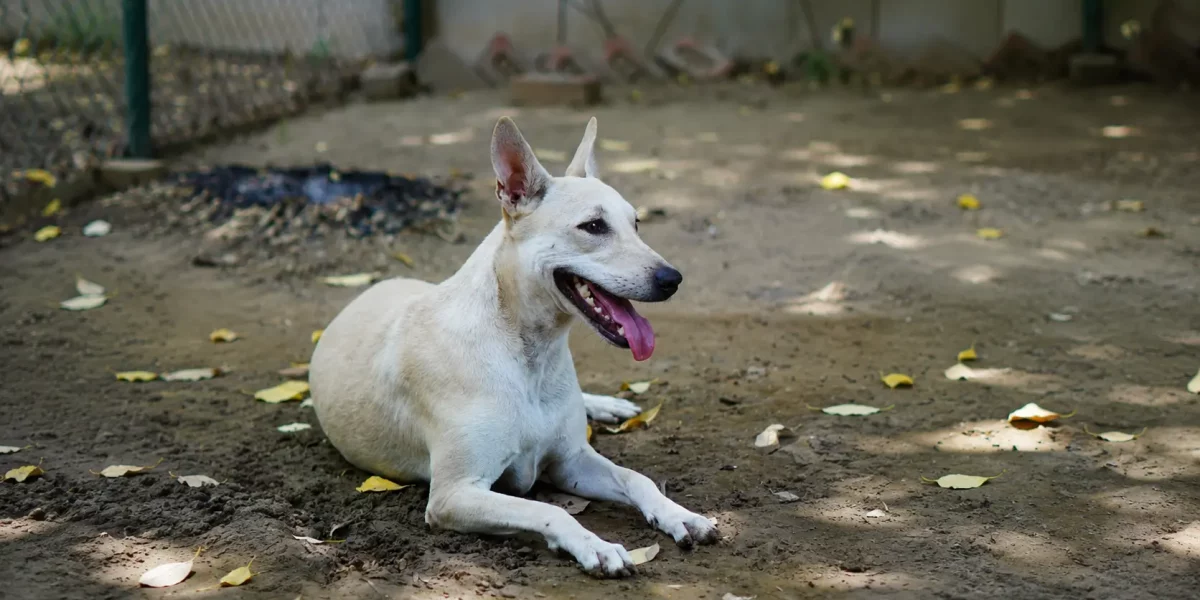
India is home to some of the oldest, hardiest, and most misunderstood dog breeds in the world. While pet parents across the country chase imported Labradors, Huskies, and Pomeranians, the dogs best suited to Indian homes, Indian weather, and Indian streets have been here all along- often overlooked, sometimes abandoned, and rarely given the credit they deserve.
At Kannan Animal Welfare (KAW), we don’t just write about these breeds- we rescue them. Every day, our team in Delhi-NCR treats, sterilizes, and rehomes native Indian dogs, most of them Indian Pariahs, who’ve been hit by cars, abandoned as puppies, or simply never given a chance. This guide covers all of India’s major native breeds, but we’ve gone deepest on the one we know best: the dog you’ll meet on almost every Indian street, and the one most likely to be waiting for a home right now.
If you finish this guide and want to meet one of these dogs in person, browse our current adoptable dogs– most are Indian Pariahs recovering from exactly the circumstances described below.
Why Native Indian Breeds Deserve a Second Look
Before we get to the list, it’s worth understanding why these breeds matter- not just as pets, but as a genuinely better option for most Indian households.
- Built for Indian climate. Thousands of years of natural selection means native breeds handle Delhi summers, monsoon humidity, and winter cold far better than breeds developed for European or American climates.
- Stronger immunity, fewer hereditary diseases. Pedigree breeds bred for appearance in closed gene pools carry high rates of hip dysplasia, brachycephalic issues, and heart conditions. Native breeds, shaped by survival rather than showring standards, largely don’t.
- Lower cost of care. Less grooming, fewer breed-specific vet bills, and diets that don’t require imported specialty food.
- Every adoption fights India’s real stray crisis. India has an estimated 60+ million stray dogs. Every native breed dog adopted from a shelter is one less dog on the street- and one more space freed up for the next rescue.
1. Indian Pariah Dog (Indie / Desi Dog)
The Indian Pariah Dog- also called the Indie, Desi Dog, or South Asian Pye-Dog- is one of the oldest dog breeds on earth, with archaeological evidence placing them in the subcontinent for over 4,500 years. Unlike almost every other breed on this list, the Pariah wasn’t bred by humans at all. It evolved through pure natural selection: only the smartest, healthiest, most adaptable dogs survived to reproduce on Indian streets and villages. That’s the entire secret to why Indies are such resilient, low-maintenance companions.
At KAW, this is the breed we know most intimately. Nearly every dog that comes through our rescue operations, every dog we sterilize through our spay/neuter program, and the vast majority of the dogs currently up for adoption on our site are Indian Pariahs- dogs like Sneezy, Grumpy, Happy, and Naya, each with their own story of recovery.
| ✔ Advantages | ✖ Considerations |
| Exceptionally hardy, disease-resistant, low-maintenance | Can be aloof with strangers initially |
| Highly intelligent, loyal, and protective | Independent streak- training needs patience, not force |
| Thrives in urban or rural settings | Needs early socialisation to be comfortable indoors |
| Wonderful with children once bonded | High prey drive around smaller animals |
| Naturally alert without excessive aggression | Not a “showpiece” breed- beauty is in the individuality |
| Long lifespan, low vet costs over a lifetime | — |
What adoption actually looks like: Most Pariahs available through KAW have already been vaccinated, sterilized, and health-checked. Many are recovering from something- an accident, an amputation, a skin condition- and are looking for a home to finish healing in. See our current adoptable Indies →
Learn more: About the Indian Pariah– our full breed page with everything you need to know before adopting.
2. Mudhol Hound (Caravan Hound)
Native to the Deccan Plateau and the town of Mudhol in Karnataka, the Mudhol Hound is an ancient sighthound once favoured by royalty for its speed and hunting instinct.
| ✔ Advantages | ✖ Considerations |
| Athletic, agile, excellent for active owners | Needs significant space and daily exercise |
| Heat-tolerant, low grooming needs | Strong prey drive, needs secure fencing |
| Loyal and an excellent natural watchdog | Not suited to apartment living |
| Quick learner with the right handler | Aloof with strangers without early socialisation |
3. Rajapalayam
Originating in Tamil Nadu during the Nayak dynasty, the Rajapalayam is a striking white guard dog historically used to protect crops and livestock, later trained by the Indian Army for its combat effectiveness and loyalty.
| ✔ Advantages | ✖ Considerations |
| Deeply loyal, strong natural guard instincts | Requires an experienced, confident handler |
| Hardy, well-adapted to local climate | High prey drive- not ideal with small pets |
| Low grooming needs | Needs ample daily exercise and space |
| Intelligent, learns quickly with consistent training | Can be overprotective without socialisation |
4. Chippiparai
A sighthound from Tamil Nadu once favoured by South Indian royalty for hunting, believed to descend from Middle Eastern breeds like the Saluki.
| ✔ Advantages | ✖ Considerations |
| Extremely loyal, deeply bonded to owner | Strong prey drive |
| Elegant, athletic build | Not ideal for homes with young children |
| Low grooming needs, heat-tolerant | Needs significant daily exercise |
| Excellent watchdog instincts | Reserved with strangers |
5. Indian Bully Kutta
Also called the Indian Mastiff, this is one of the most powerful and imposing native breeds, historically used for guarding and hunting large game.
| ✔ Advantages | ✖ Considerations |
| Fearless, formidable natural guardian | Not suitable for first-time owners |
| Loyal to experienced, confident handlers | Requires significant space, not apartment-friendly |
| Low grooming needs | Needs firm, early socialisation to prevent aggression |
| Adapted to hot climates | Prone to joint issues without proper care |
6. Kombai
Originating in Tamil Nadu, historically used by local communities for guarding property and hunting wild boar.
| ✔ Advantages | ✖ Considerations |
| Brave, deeply protective | Not suited for first-time or timid owners |
| Low grooming and upkeep | Can be reactive to strangers and unknown dogs |
| Long lifespan, naturally resilient | Needs space and a clear sense of purpose |
7. Himalayan Sheepdog
A rugged mountain breed developed by Himalayan shepherds for livestock guarding in harsh, high-altitude terrain.
| ✔ Advantages | ✖ Considerations |
| Strong guardian instincts, excellent protector | Not suited for apartment or city living |
| Thick coat suited to cold climates | High grooming needs, especially when shedding |
| Loyal and devoted to family | Can be territorial with strangers |
8. Bakharwal Mastiff
Critically endangered. A rare Himalayan livestock guardian breed developed by the nomadic Bakharwal and Gujjar tribes of Jammu & Kashmir and Ladakh to protect livestock from leopards, wolves, and bears.
| ✔ Advantages | ✖ Considerations |
| Fiercely loyal and protective | Not suited to city or apartment life |
| Naturally hardy in extreme cold | Critically endangered- conservation, not pet ownership, is the priority |
| Minimal barking unless alerting to real threats | Requires experienced handling |
If you’re drawn to this breed, the most meaningful way to help is supporting conservation of the breed within its native communities, rather than seeking one out as a pet.
9. Indian Spitz
Descended from European Spitz-type dogs brought over during the colonial era and adapted for Indian climates, the Indian Spitz became a beloved urban companion breed through the 1980s and ’90s.
| ✔ Advantages | ✖ Considerations |
| Highly adaptable to Indian city life | Can be vocal if under-exercised |
| Friendly, alert, loyal | Needs consistent grooming |
| Easy to train | Prone to separation anxiety if left alone often |
10. Rampur Greyhound
A rare, powerful sighthound from Uttar Pradesh, developed during the Mughal era by crossing the Afghan Hound with native Indian sighthounds.
| ✔ Advantages | ✖ Considerations |
| Exceptionally fast and athletic | Not suited to apartment living |
| Loyal and deeply bonded to family | Very high exercise needs |
| Naturally healthy, low hereditary disease rates | Extremely rare- difficult to find outside northern India |
Meet the Dogs Behind This Guide
Every breed on this list is a story on paper. But right now, in our Delhi shelter, there are real Indian Pariahs- Sneezy, Grumpy, Sleepy, Happy, Doc, Naya, Sana, and Maggie among them- who are exactly the dog described in section one, waiting for exactly the home this guide is meant to help you build.
Meet the dogs and start an adoption →
Or support their care with a donation →
Frequently Asked Questions
The Indian Pariah Dog is the most forgiving choice for a first-time owner willing to invest in early socialisation. They’re intelligent, self-sufficient, and remarkably adaptable- and because they’re the most commonly available breed at Indian shelters, adopting one is also the most impactful choice you can make.
The Indian Pariah Dog and Indian Spitz adapt best to apartment life with daily exercise. The sighthounds (Mudhol Hound, Chippiparai, Rajapalayam, Rampur Greyhound) and the mastiff/guardian breeds (Bully Kutta, Himalayan Sheepdog, Bakharwal, Kombai) need open space and are not suited to apartments.
Kannan Animal Welfare rehabilitates and rehomes Indian Pariah dogs throughout Delhi-NCR year-round. You can view currently adoptable dogs, or if you’re not ready to adopt, you can become a virtual parent to support a dog still in our care.
You can sponsor a meal, support our spay & neuter program to help control the street population humanely, or foster a dog temporarily while it waits for a permanent home.