

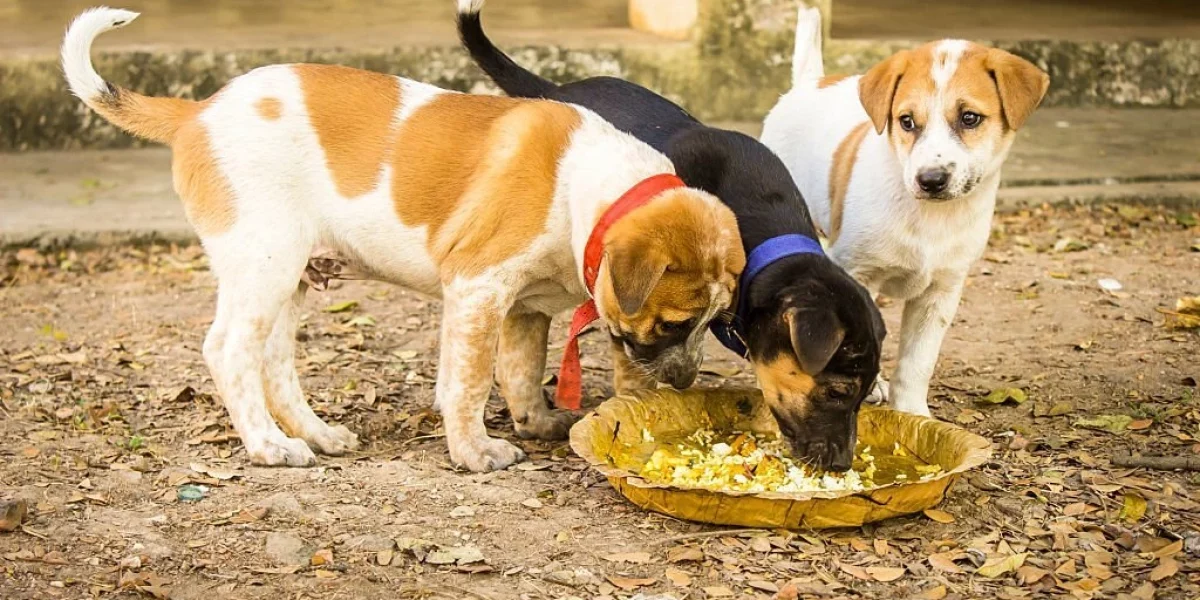
Every gully in India seems to have one. A dog who naps under the same scooter every afternoon, knows exactly when the samosa stall opens, and gives you that look when you walk past with a packet in your hand.
Most of us cave. We tear open the biscuits, toss a few, and keep walking. Then somewhere around the corner the thought shows up: was that actually okay for her?
Honestly, it depends on what was in the packet. Feeding stray dogs is one of the kindest small habits a person can have. But kindness won’t stop a dog getting sick on the wrong food, or getting hit by a bike because she was fed on the road. A few simple rules fix most of that.
Why it matters (and where it stops mattering)
A street dog never really knows where the next meal is coming from. The dhaba that left out roti last night might stay shut tonight. In peak summer she might go hours without finding water. Puppies feel this first. So do nursing mothers, and the old dogs with grey muzzles who can’t fight the younger ones for scraps anymore.
So yes, a regular meal helps a lot. What it can’t do is vaccinate her, sterilise her or set a broken leg. That’s the part people forget.
Kannan Animal Welfare (KAW) in Delhi treats feeding as the starting point, not the whole job. Its website says it looks after more than 250 resident animals and around 200 street animals through daily feeding and care, alongside rescue and treatment. Daily meaning daily. Diwali, scorching June afternoons, monsoon waterlogging, all of it.
So what should you actually feed them?
For a one-time snack, plain home food is fine. If you’re feeding the same dogs every day, give it a bit more thought, because what’s fine once in a while isn’t always fine as a diet.
Rice is what most people reach for. Dogs eat it happily, but plain rice is basically just filling their stomach. Add a boiled egg or some boneless chicken and now you’re talking. Keep it bland, so no salt, no mirchi, no masala. And watch out for onion and garlic, which is harder than it sounds because they’re in practically every Indian gravy.
Eggs, by the way, are the unsung hero here. They’re cheap, easy and full of protein. Boil them properly, let them cool and crumble them up. Chicken’s good too if you’re careful with the bones (more on that below).
If you’re a regular feeder, it’s worth picking up a packaged dog food labelled “complete and balanced”. It fills in the gaps home food leaves. Dry kibble keeps well in a dabba, and older dogs with bad teeth usually prefer the wet stuff.
What about roti? A small plain one now and then won’t hurt. Milk is trickier. Lots of adult dogs can’t handle lactose, and you’ll know about it the next day.
Then there’s water, which honestly gets forgotten more often than food. In May, a bowl of clean water might be the best thing you give a street dog all week. Pick something heavy so it doesn’t get knocked over, refill it every day and scrub it before it turns green.
The foods that can genuinely hurt them
A dog will eat almost anything you put in front of it. That’s the whole problem.
Chocolate is poisonous to dogs, and so are grapes and raisins, which can wreck the kidneys. Onion and garlic damage red blood cells even after cooking, which is why the leftover sabzi is a bad idea. Watch for xylitol too. It’s a sweetener in some sugar-free sweets and gum, and it can make a dog’s blood sugar drop dangerously. Cooked bones splinter and can choke a dog or tear up its insides. Anything very oily, salty or spicy is asking for an upset stomach, and stale food is an obvious no.
The easiest test? If you can’t say exactly what’s in it, don’t give it.
If you suspect a dog has eaten something toxic, don’t google home remedies. Call a vet.
Feeding without causing problems
Where you feed matters almost as much as what you feed. Check with your RWA or ward office whether there’s a designated feeding spot in your area. Roads are the worst choice, full stop. A hungry dog will bolt across traffic for food without a second glance. Society gates and kids’ play areas cause trouble of a different kind, usually in the form of angry messages on the society WhatsApp group.
Bring the food in a covered box and serve it in a steel bowl you can take back home. Paper plates blow around and become litter, and litter is what turns neighbours against the dogs.
Go slowly. Stand a few steps back and just watch for a moment. Is she relaxed, or is her tail tucked? Don’t stare her down or try to pet her, and definitely don’t corner her. Plenty of dogs are hungry and scared in equal measure. Set the bowl down, step away and let her eat. If a few dogs turn up at once, put the portions a fair distance apart. And never reach in to take a bowl away from a dog that’s eating.
When she’s done, clear up. Leftovers draw rats, crows and complaints, roughly in that order.
There’s one quiet advantage to feeding the same dogs every day: you get to know them. You’ll be the first to spot a new limp, a cut that isn’t healing, or a dog who suddenly isn’t hungry. That’s your cue to call for help.
Is feeding street dogs legal in India?
Short answer: yes, but where you do it matters.
Under the Animal Birth Control Rules, 2023, residents and local bodies share responsibility for community animals, and that includes feeding. Then, in its order of 22 August 2025, the Supreme Court told municipal bodies to set up designated feeding areas and restricted feeding on streets outside them.
Each city is handling this a little differently and things keep shifting, so check with your municipal corporation or the Animal Welfare Board of India. Practically speaking, if you feed at an approved spot and leave it clean, you’re doing it right.
Mistakes most of us have made
The big one is overfeeding. It happens when three different neighbours in the same lane are each feeding the same dog without realising it. A quick chat with the other feeders sorts it out.
Another is getting defensive with neighbours. Some people are genuinely scared of dogs, or worried about bites and mess. Arguing with them doesn’t help the dogs. A fixed, clean feeding spot usually does.
The last one is treating food like a cure. A dog with a deep wound or a fracture, or one acting strangely aggressive, needs a vet. Another meal just delays that.
Through summer, monsoon and winter
Summer is about water and shade more than anything else. The monsoon brings its own mess, since food spoils within hours and the ground is always wet, so feed under some kind of cover and don’t leave anything lying around. Winter hits puppies and weak dogs hardest. Steady meals help them get through it, and an old blanket tucked into a sheltered corner (not on a footpath or road) can make a real difference on a cold night.
When a dog is hurt or unwell
Picture this. You reach your usual spot and one of your regulars is dragging a back leg. She still limps over for food, tail low.
Food won’t fix this one. Keep a bit of distance, since a dog in pain can snap even at a familiar face. Take a photo or short video, note exactly where you are and contact a vet, your municipal animal service or a rescue group. Unless you’ve been trained, don’t try lifting or moving her yourself.
In Delhi, KAW takes rescue reports on WhatsApp at +91 9999670042. Send the location along with photos and a video.
If a dog looks rabid, keep well away. And if anyone gets bitten or scratched, wash the wound with soap under running water for a full 15 minutes, then see a doctor the same day for a rabies assessment.
What it takes to feed hundreds of dogs a day
Feeding two dogs in your lane is a nice habit. Feeding hundreds every single day is logistics. Somebody has to buy food in bulk, cook it, load it up, drive the route, serve each stop and wash every bowl at the end. Then wake up and do it again, whether or not the donations came in that month.
That’s what KAW’s local stray feeding programme does in Delhi, on top of the rescue and treatment work at Kannan Animal Welfare.
Not many of us can feed 200 dogs. A lot of us can help pay for a few of those meals, though.
Where your money goes
KAW publishes these rough estimates:
| Donation | What it can support |
| ₹300 | A street-feeding round for about 10 dogs |
| ₹750 | About a week of food, shelter and care for a resident dog |
| ₹1,500 | Food for about 50 street dogs |
| ₹3,000 | About a month of care for a resident dog |
Actual costs vary, and donations also go towards KAW’s wider care work.
Quite a few people sponsor a feeding round on their birthday or anniversary, or in memory of a dog they’ve lost. If you can manage it, a small monthly amount goes even further. The dogs get hungry every month, after all.
Sponsor a meal for street dogs
Can’t donate right now?
No problem at all. Volunteering with a rescue, supporting a sterilisation drive near you, or just reporting an injured dog properly with a location all count. And if you’ve got room at home, fostering or adopting even one dog changes everything for that dog.
A few quick questions people ask
Not rice on its own. Add an egg or some chicken so it’s a proper meal.
A little plain roti now and then is fine. Skip the ghee, onion and garlic.
Better not. Plenty of adult dogs can’t digest it well. Water is the safer bet.
Once or twice a day for adults, a bit more often for puppies. Check with other feeders so nobody’s eating three dinners.
No. Sterilisation and adoption do that. Feeding just keeps the dogs healthier in the meantime.
One last thing
You won’t feed every hungry dog in your city. Nobody can. But knowing what’s safe, keeping a water bowl full and making a phone call when a dog is hurt already puts you ahead of most people walking past.
And if you’d like to do a bit more, KAW could use the help keeping tomorrow’s bowls full.