

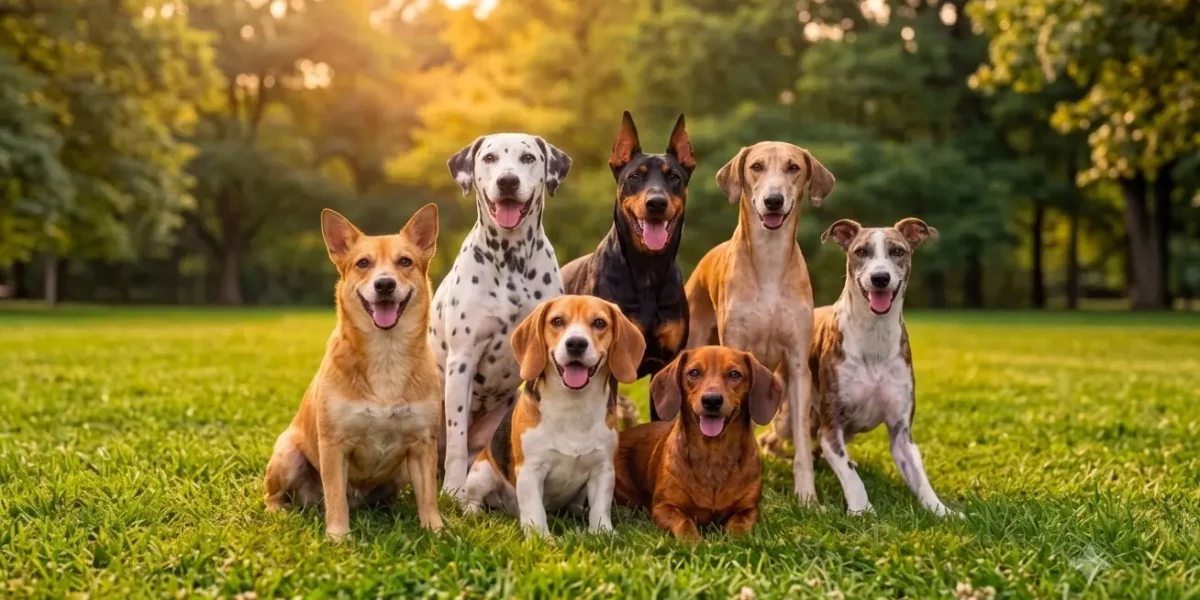
The sandy-brown dog asleep under the chai stall outside your gate may belong to a canine lineage that has lived alongside people on the Indian subcontinent for generations.
Yet when people search for Indian dog breeds, they often find the same handful of names, photos and descriptions about loyalty, intelligence and weather resistance.
India’s native dogs are much more diverse than that.
There are lean sighthounds built for speed, powerful property guardians, thick-coated Himalayan livestock dogs, village landraces and companion dogs. Some have formal recognition from government institutions or kennel clubs. Many others remain regional breeds or populations with little formal documentation.
As of August 2026, six indigenous dog breeds have been registered through ICAR-NBAGR: Rajapalayam, Chippiparai, Mudhol Hound, Gaddi, Changkhi and Kombai.
But official registration tells only part of the story.
This guide looks at India’s best-known native dog breeds, what they were traditionally bred to do, how recognition works, and most importantly, what kind of home each dog actually needs.
How Many Indian Dog Breeds Are There?
There is no single universally agreed number of Indian dog breeds.
Depending on how regional landraces, local populations and formally standardised breeds are counted, India has roughly 20 or more named native dog breeds and types.
That difference matters because the term “Indian dog breed” can refer to several different things.
A dog may be officially registered by ICAR-NBAGR, recognised within the pedigree or dog-show system, documented as a regional population, or exist as a naturally developed landrace such as the Indian Pariah Dog.
So a breed does not suddenly become Indian only when an organisation issues it paperwork.
Formal recognition is better understood as documentation of a population that already exists.
Which Indian Dog Breeds Are Officially Registered?
ICAR’s National Bureau of Animal Genetic Resources, or NBAGR, documents and registers indigenous animal genetic resources in India.
Dogs entered this national breed-registration system relatively recently.
Rajapalayam, Chippiparai and Mudhol Hound became the first three native dog breeds registered by the bureau in 2020.
Gaddi and Changkhi followed in 2025.
In August 2026, Kombai became the sixth registered indigenous dog breed.
| Indian Dog Breed | Home Region | ICAR Registration | Traditional Role |
| Rajapalayam | Tamil Nadu | 2020 | Hunting and guarding |
| Chippiparai | Tamil Nadu | 2020 | Sighthound and hunting |
| Mudhol Hound | Karnataka | 2020 | Hunting, guarding and sighthound work |
| Gaddi | Himachal Pradesh | 2025 | Livestock guarding |
| Changkhi | Ladakh | 2025 | High-altitude livestock protection |
| Kombai | Tamil Nadu | 2026 | Guarding and hunting |
Registration gives these breeds formal documentation and accession numbers and can support their study and conservation.
It does not mean these are the only native dogs India has.
ICAR Recognition and Kennel Club Recognition Are Not the Same Thing
This distinction causes confusion in many articles about Indian dog breeds.
ICAR-NBAGR registration focuses on documenting India’s indigenous animal genetic resources.
Kennel club recognition works differently. It is generally concerned with breed standards, pedigrees, registration and dog shows.
That means a breed can be recognised within one system without having exactly the same status in another.
The Kennel Club of India has recognised several native breeds, including well-known names such as Rajapalayam, Chippiparai, Kanni, Kombai and Mudhol Hound.
Then there are native dogs that fall outside these formal systems altogether.
The Indian Pariah Dog is the most obvious example.
Indian Dog Breeds at a Glance
| Breed | Region | Traditional Role | Typical Activity Needs | Urban Home Suitability |
| Indian Pariah Dog | Across India | Village and companion dog | Moderate to high | Often good, depending on the individual |
| Indian Spitz | India | Companion | Moderate | Often suitable |
| Rajapalayam | Tamil Nadu | Hunting and guarding | High | Challenging for many urban homes |
| Chippiparai | Tamil Nadu | Sighthound | High | Needs an active household |
| Mudhol Hound | Karnataka | Sighthound and working dog | High | Needs substantial exercise |
| Kombai | Tamil Nadu | Guarding | High | Better for experienced handlers |
| Kanni | Tamil Nadu | Sighthound | High | Better for active households |
| Rampur Hound | Uttar Pradesh | Hunting | High | Needs exercise and secure space |
| Gaddi | Himachal Pradesh | Livestock guardian | High | Better suited to appropriate cooler environments |
| Changkhi | Ladakh | Livestock guardian | High | Highly specialised environment and temperament |
| Bakharwal | Jammu and Kashmir | Livestock guardian | High | Better suited to cooler climates and space |
| Jonangi | Southern India | Working and guarding | Moderate to high | Depends heavily on individual temperament |
| Kaikadi | Maharashtra | Hunting | High | Active households |
| Mahratta Greyhound | Maharashtra | Sighthound | High | Experienced, active owners |
These descriptions are guidelines, not guarantees. Age, socialisation, training, health and the individual dog’s temperament can matter as much as breed.
1. Indian Pariah Dog or Indie
The Indian Pariah Dog, commonly called an Indie or Desi dog, is one of India’s most familiar native dogs.
It is generally considered a landrace rather than a modern pedigree breed created through a closed studbook.
Typical Pariah-type dogs are medium-sized with erect ears, a wedge-shaped head, a short coat and an athletic build. But naturally occurring populations are not as physically uniform as tightly standardised pedigree breeds.
One important distinction is worth making:
An Indian Pariah Dog and a street dog are not necessarily the same thing.
“Street dog” describes where a dog lives. It does not establish its ancestry.
India’s free-ranging dog population contains Pariah-type dogs as well as dogs of mixed ancestry.
What are Indies like as pets?
Many Indies are intelligent, observant and highly adaptable.
But there is no single “Indie temperament.”
A puppy raised around people from an early age can behave very differently from an adult dog that has survived years of threats, traffic or conflict with other dogs.
An adopted adult dog also has one practical advantage: its approximate size, personality and energy level may already be easier to judge.
For many households looking primarily for a companion, an Indie can make more practical sense than acquiring a rare working breed because it looks impressive.
You can learn more in our guide to the Indian Pariah Dog, or read why and how to adopt an Indian Pariah Dog.
2. Rajapalayam
The Rajapalayam comes from Tamil Nadu and takes its name from the town of Rajapalayam.
It is one of India’s most visually distinctive native breeds, particularly because of its tall frame and traditionally associated white coat.
Historically, Rajapalayams were used for hunting and guarding.
Those working origins matter when considering one as a pet.
A dog developed to notice threats, pursue animals and work independently should not automatically be expected to behave like a breed developed primarily for companionship.
Rajapalayams can form strong bonds with familiar people and may be reserved around strangers.
Early socialisation, consistent training and responsible handling are therefore important.
For many first-time dog parents living in small urban homes, a Rajapalayam may be more challenging than an Indie or a smaller companion breed.
3. Chippiparai
The Chippiparai is a native sighthound from Tamil Nadu.
Its narrow body, long legs, deep chest and lean frame reflect its traditional purpose: pursuing game across open terrain using speed and sight.
That history can also translate into a strong instinct to chase.
A Chippiparai therefore needs more than an occasional walk around the block.
Owners need to think about physical exercise, mental stimulation, recall training and safe spaces where the dog cannot simply pursue a moving animal into traffic.
They can be closely bonded with familiar people while remaining more reserved with strangers.
For an active household that understands sighthounds, the Chippiparai can be fascinating. For someone looking for a low-energy apartment dog purely because native breeds are assumed to be “easy,” it may be a poor match.
4. Mudhol Hound
The Mudhol Hound is one of India’s best-known native sighthounds and is particularly associated with Karnataka and the Deccan region.
It is also known by the Caravan Hound name in historical and breed discussions.
Mudhol Hounds were developed for speed, endurance, hunting and guarding work.
Their ability is not purely historical. Indian security forces have also experimented with and deployed native breeds, including the Mudhol Hound, for working roles.
That is an impressive demonstration of the breed’s athletic potential.
It is also a reason not to treat the Mudhol as a decorative pet.
An athletic working dog needs appropriate outlets for its energy.
Mudhol Hounds generally make more sense for active owners who can provide consistent exercise, training and securely controlled opportunities to run.
5. Kombai
The Kombai, or Combai, is another important native breed from Tamil Nadu.
Historically associated with guarding and hunting, it has a stronger, more compact appearance than India’s lightly built sighthounds.
In August 2026, ICAR-NBAGR registered the Kombai as an indigenous breed from Tamil Nadu, making it the sixth dog breed in the national registration system.
Its traditional guarding background deserves attention.
Confidence and territorial instincts can be valuable in a working dog, but those same characteristics require careful socialisation in a modern household.
A prospective owner should therefore choose a Kombai because its temperament and needs suit their lifestyle, not simply because the breed is rare or historically important.
6. Gaddi Dog
The Gaddi Dog comes from Himachal Pradesh and is closely associated with pastoral communities that move livestock through Himalayan terrain.
Its traditional work was very different from that of a southern Indian sighthound.
Rather than pursuing game, Gaddi dogs helped guard livestock in demanding mountainous environments.
That required independence, confidence, endurance and the ability to respond to potential threats.
These qualities can make livestock guardian breeds very capable working dogs but also more complicated urban pets.
Climate is another serious consideration.
A dog developed for Himalayan conditions cannot simply be grouped with every other “Indian breed” under the assumption that all native dogs are equally suited to India’s hottest cities.
7. Changkhi
The Changkhi is associated with Ladakh and the Changthang region.
Traditionally used by pastoral communities for livestock protection, the Changkhi developed in an environment dramatically different from India’s hot and humid plains.
Its recognition in 2025 brought greater formal attention to one of India’s lesser-known native dog populations.
For prospective owners, however, rarity should never be the main attraction.
A high-altitude livestock guardian has specific climatic, behavioural and space requirements.
The Changkhi is therefore better understood first as a specialised working breed rather than as an unusual pet for city life.
8. Kanni
The Kanni is a sighthound associated with Tamil Nadu.
Lean, agile and built for speed, it shares many functional characteristics with other southern Indian hunting hounds.
Its traditional role means potential owners should expect an athletic dog rather than a passive house pet.
Regular physical activity, secure exercise and early socialisation are important.
Discussions around Kanni and Chippiparai classification can also become complicated, with breed names and coat varieties treated differently by different sources and communities.
For prospective owners, understanding the dog’s actual lineage, temperament and working characteristics is more useful than arguing over labels alone.
9. Rampur Hound
The Rampur Hound, often called the Rampur Greyhound, is associated with Rampur in Uttar Pradesh.
It was historically developed as a hunting hound.
Like other sighthounds, its body is built for efficient movement and speed.
An adult Rampur may appear perfectly relaxed indoors and still require substantial opportunities for physical activity.
Homes considering one should therefore have a realistic exercise plan and secure handling arrangements.
10. Bakharwal Dog
The Bakharwal Dog is associated with pastoral communities in Jammu and Kashmir.
It has traditionally been used for livestock guarding in Himalayan environments.
Large livestock guardians tend to be independent, alert and protective because those characteristics were useful when working around animals and potential predators.
That background is important for anyone considering such a dog purely as a family pet.
Its heavier coat and regional adaptation also mean climate should be considered carefully.
A dog’s country of origin does not tell you enough about the weather it is suited to. India contains everything from cold Himalayan environments to tropical coastal regions.
11. Jonangi
The Jonangi is associated with southern India and is one of the country’s lesser-known native dog populations.
It has traditionally been connected with working and guarding roles.
Because breeds like the Jonangi are much less standardised and less commonly encountered than popular companion breeds, broad temperament claims should be treated cautiously.
If you are considering one, learn as much as possible about the individual dog, its parents, its early socialisation and the environment in which it was raised.
12. Kaikadi
The Kaikadi is associated particularly with Maharashtra and with communities that historically used dogs for hunting.
It is generally described as a lean, active native dog.
As with India’s other hunting types, its original purpose is more useful to prospective owners than a simple “loyal and intelligent” description.
A dog bred to move, chase and work needs an owner prepared to provide exercise and structure.
13. Mahratta Greyhound
The Mahratta Greyhound, or Mahratta Hound, represents another part of India’s regional sighthound tradition.
Associated with Maharashtra, these dogs historically emphasised speed, agility and working ability rather than the highly uniform appearance expected in many modern show breeds.
Exercise and prey drive are therefore more important ownership considerations than grooming.
14. Indian Spitz
The Indian Spitz occupies a somewhat different position from ancient regional landraces and traditional working dogs.
It became widely popular in India as a companion dog and is much more naturally associated with household life than breeds developed to hunt or protect livestock.
Indian Spitz dogs tend to be alert and interactive and generally need regular walks, play, training and grooming.
Their smaller size can make them easier to accommodate in an urban home than a large livestock guardian or highly athletic hound.
However, small does not mean maintenance-free.
Every dog still requires exercise, veterinary care, training, enrichment and attention.
What About Other Indian Dog Breeds?
India’s native dog heritage extends beyond the breeds above.
Names such as Pashmi Hound, Banjara Hound, Pandikona, Bully Kutta, Himalayan Sheepdog or Bhutia, Haofa and Ramanathapuram Mandai appear in historical records, local traditions, dog-show circles and breed documentation.
Some remain concentrated in particular regions. Others have small populations, inconsistent documentation or disagreements around classification.
That is one reason a precise “total number of Indian dog breeds” is difficult to give.
Instead of assuming that a breed not found on an official registry does not exist, it is better to distinguish between formal recognition and native population history.
Why Isn’t the Indian Pariah Dog One of the Six ICAR-Registered Breeds?
The Indian Pariah Dog is generally described as a landrace.
A landrace develops over generations within a particular environment and population rather than through the tightly controlled breeding programme associated with many pedigree breeds.
That helps explain why the Indian Pariah does not fit neatly into the same category as geographically defined and formally registered breeds such as the Rajapalayam or Mudhol Hound.
Its lack of ICAR breed registration should not be mistaken for a lack of value.
At Kannan Animal Welfare, many of the dogs we rescue and rehome are Indies or Indie mixes.
Mansi arrived as a puppy, partially paralysed and barely responsive. After intensive care, she recovered and became a playful, curious dog who loves human company.
Stories like hers matter because India’s native dogs should not only be discussed as genetic heritage.
Many are living on streets or in shelters right now and need homes. If you cannot take one in, there are still simple ways to help street dogs in India.
Are Indian Dog Breeds Better Suited to India’s Climate?
You will often hear that Indian dogs are automatically better adapted to “Indian weather.”
That statement needs context.
India does not have one climate.
A Chippiparai from Tamil Nadu, a Gaddi from Himachal Pradesh and a Changkhi from Ladakh developed under dramatically different environmental conditions.
Short-coated dogs originating in warmer regions may cope differently with heat than heavily coated Himalayan breeds.
Even dogs considered relatively heat-tolerant still need shade, drinking water, sensible exercise timing and protection during extreme temperatures.
So the better question is not:
“Is this an Indian dog?”
It is:
“What environment did this particular breed develop in, and does that match where I live?”
Are Indian Dog Breeds Healthier Than Foreign Breeds?
Another common claim is that Indian dogs have stronger immunity and rarely get sick.
That is too simplistic.
Some naturally developed populations may benefit from broad genetic diversity and the absence of extreme physical traits that cause problems in certain highly selected breeds.
But nationality alone does not make a dog healthy.
Genetics, breeding practices, nutrition, body condition, vaccination, parasite prevention, exercise, living conditions and access to veterinary care all matter.
Native dogs can develop disease.
Foreign breeds can live long, healthy lives when appropriately bred and cared for.
A more responsible reason to consider an Indian breed is that its physical characteristics and historical working role may be better matched to your environment and lifestyle.
Are Indian Dog Breeds Good Working Dogs?
Yes. India’s native breeds have a long history of practical work.
Different breeds were developed for hunting, guarding property, protecting livestock and accompanying pastoral communities.
That working ability continues to attract institutional interest.
Mudhol and Rampur Hounds, for example, have been used in Indian security-force dog programmes.
This is useful evidence that native breeds can perform demanding roles.
But working ability is also something prospective pet parents need to respect.
A dog capable of intensive tracking, guarding or pursuit does not lose those needs simply because it now lives inside a house.
Which Indian Dog Breed Is Right for Your Home?
The best way to choose a dog is to start with your lifestyle rather than a photograph.
Consider these factors before choosing any breed:
- Your home: A small flat can work for many individual dogs, but very large guardians and highly athletic hounds can be much harder to manage without adequate exercise and appropriate space.
- Your climate: Himalayan breeds and short-coated southern breeds have very different environmental histories.
- Your activity level: A Mudhol Hound or Chippiparai needs a very different routine from a less athletic companion dog.
- Your experience: Strong guarding instincts, prey drive and independence can be difficult for inexperienced handlers.
- Children and other pets: Individual temperament, socialisation and management matter. Breed alone cannot guarantee compatibility. If you already have animals at home, read our guide on how to introduce a rescued dog to your existing pets.
- Your time: Dogs need more than food and a morning toilet walk. Training, exercise and companionship are daily commitments.
- Why you want the dog: Rarity, appearance and social-media appeal are poor reasons to choose a breed.
If your primary goal is simply a loving family companion, consider visiting a shelter before searching for a rare breed.
You can see Kannan Animal Welfare’s dogs available for adoption and meet dogs whose personalities may already be known to their caregivers.
Adopting an Indie vs Buying a Native Indian Breed
There is nothing wrong with being interested in preserving a particular native breed.
Responsible breeding can play an important role in protecting small regional populations.
But preservation and commercial puppy production are not the same thing.
If you specifically want a Rajapalayam, Mudhol, Kombai or another uncommon native breed, look carefully at how the dogs are bred and raised.
Ask about the parents, health, temperament, living conditions and documentation. Be cautious of sellers whose main pitch is aggression, “purity,” rarity or exaggerated guarding ability.
If what you really want is a companion, adoption may give you many more suitable choices. Our post on the nature and benefits of the Indie dog explains what to expect.
Shelters frequently have adult Indies whose energy levels, size and personalities are already visible.
That can make matching the dog to your household easier than choosing a young puppy based only on breed expectations.
How to Care for Indian Dog Breeds
Native dogs still require proper dog care.
They need complete and balanced nutrition appropriate to their life stage, clean drinking water, vaccinations, parasite control, veterinary care, daily activity, training and social interaction. Our pet care guide for first-time pet owners in India covers these basics step by step.
Exercise should be adapted to the dog.
A young sighthound and an older rescued Indie should not be given identical routines simply because both are Indian dogs.
Mental enrichment matters as well.
Sniffing walks, training, interactive play, food enrichment and appropriate social experiences can be just as important as covering a fixed number of kilometres.
You can read our detailed guide to feeding and caring for native Indian breeds for more practical advice.
Why India’s Native Dog Breeds Matter
Indian dog breeds represent much more than alternatives to Labradors, German Shepherds or Golden Retrievers.
They are part of India’s living animal heritage.
The Rajapalayam tells one story of Tamil Nadu. The Mudhol tells another from the Deccan. The Gaddi and Changkhi reflect pastoral life in Himalayan landscapes. The Indian Pariah represents something different again: generations of dogs living alongside human communities without being created by a modern pedigree system.
Official recognition can help document and conserve rare populations.
But conservation should not turn native breeds into fashion accessories.
A rare working dog placed in an unsuitable urban household is not being preserved responsibly.
Understanding what each dog was developed to do is just as important as celebrating where it came from.
Frequently Asked Questions About Indian Dog Breeds
There is no universally agreed number because India has formally registered breeds, kennel-club breeds, regional populations and naturally developed landraces. More than 20 names appear across commonly cited lists and regional documentation.
As of August 2026, six indigenous dog breeds are registered through ICAR-NBAGR: Rajapalayam, Chippiparai, Mudhol Hound, Gaddi, Changkhi and Kombai.
Rajapalayam, Chippiparai and Mudhol Hound became the first three native dog breeds registered by ICAR-NBAGR in 2020.
The Kombai of Tamil Nadu was registered in August 2026.
There is no breed that is automatically suitable for every apartment. Many Indies and Indian Spitz dogs can adapt successfully to urban homes when their individual energy levels and exercise needs are met. Highly athletic sighthounds and large livestock guardians are generally more demanding.
No. “Street dog” describes where a dog lives. Indian Pariah Dog refers to a native landrace or type. Street populations can contain Pariah-type dogs as well as dogs of mixed ancestry.
Not automatically. Genetics, responsible breeding, preventive veterinary care, nutrition and lifestyle all influence health. Some native populations may avoid certain problems associated with extreme breed traits, but Indian dogs can still develop illnesses.
Some short-coated native dogs have relatively simple grooming needs, but that does not make them low-responsibility pets. Exercise, training, healthcare, nutrition and companionship remain essential.
The names Mudhol Hound and Caravan Hound have historically been used for the same or closely identified Deccan sighthound population, although naming conventions can differ between sources and registries. ICAR-NBAGR uses the name Mudhol Hound for its registered breed.
Several native breeds have histories connected with guarding, including Rajapalayam, Kombai, Gaddi and other livestock guardian populations. Strong guarding instincts also increase the importance of training, socialisation and responsible management.
If an Indie matches your household, lifestyle and experience, adoption can be an excellent option. Rather than choosing by breed label alone, meet the dog and discuss its temperament, energy level and history with the shelter or foster caregiver.
The Indian Dog That Needs You May Already Be Waiting
India’s native dogs deserve greater recognition.
But recognising them should mean more than sharing photographs of rare breeds or celebrating an accession number.
It should also mean making responsible choices about the dogs already around us.
For someone with the right environment and experience, preserving a regional Indian breed can be meaningful.
For many households looking for a companion, however, the right dog may already be waiting in a shelter.
At Kannan Animal Welfare, rescued dogs arrive with very different histories. Some need medical rehabilitation. Others need time to learn that people can be trusted. Many simply need a home. You can see how donations help save these animals.
If you are ready to bring a dog into your family, meet our dogs available for adoption.
If adoption is not possible right now, you can still become a virtual parent and help support a sanctuary dog. Here is how virtual parenting works.
A pedigree documents where a dog came from.
A responsible home determines what happens next.