

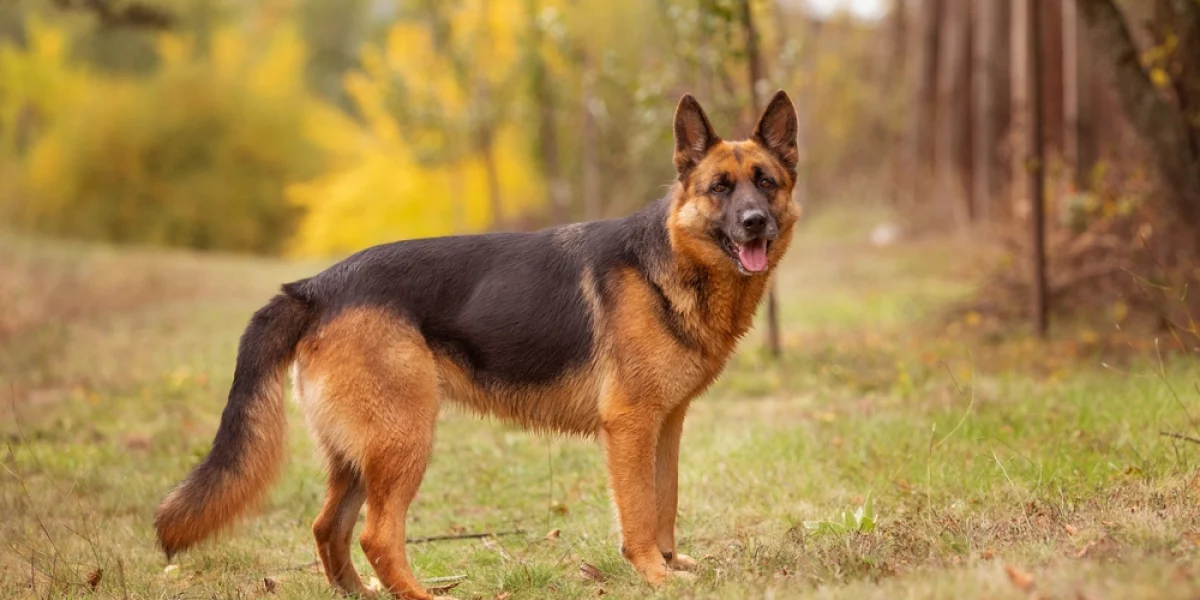
German Shepherd
The German Shepherd Dog is an intelligent, athletic working breed developed to think, move and work alongside a handler.
That combination makes the German Shepherd one of the world’s most versatile dogs. It also makes the breed considerably more demanding than its popularity suggests.
A well-bred, well-trained German Shepherd can be a devoted family companion, service dog, sport partner, search dog or working K9. A poorly matched Shepherd with too little training and stimulation can become difficult very quickly.
The important question is not simply whether you like German Shepherds.
It is whether your lifestyle can meet the needs of the German Shepherd you bring home.
German Shepherd at a glance
| Trait | German Shepherd |
| Breed group | Herding / Pastoral |
| Origin | Germany |
| Male height | About 60 to 65 cm |
| Female height | About 55 to 60 cm |
| Male weight | About 30 to 40 kg |
| Female weight | About 22 to 32 kg |
| Typical lifespan | Roughly 9 to 13 years |
| Coat | Double coat |
| Coat varieties | Standard double coat and long double coat |
| Shedding | Heavy |
| Exercise needs | High |
| Trainability | High |
| Mental stimulation | High |
| Stranger friendliness | Usually reserved |
| First-time owner suitability | Possible, but demanding |
| Apartment living | Possible with sufficient exercise and training |
Individual dogs vary considerably, especially between different breeding lines.
Where did the German Shepherd come from?
The modern German Shepherd Dog was developed in Germany at the end of the nineteenth century.
Captain Max von Stephanitz wanted to create a standardized working dog from capable regional shepherd dogs rather than breed primarily for appearance.
In 1899, von Stephanitz purchased a dog called Hektor Linksrhein, later renamed Horand von Grafrath. Horand became the first registered German Shepherd Dog of the newly established Verein für Deutsche Schäferhunde, usually known as the SV.
The SV was founded on 22 April 1899.
From the beginning, the German Shepherd was developed around qualities such as working ability, intelligence, confidence, trainability, endurance and structural efficiency.
That foundation helps explain why German Shepherds later became prominent in:
- police work
- military work
- tracking
- search and rescue
- protection sports
- guide and assistance work
- competitive obedience
- herding
- detection work
The German Shepherd did not become a working dog after the breed was created. Work was the reason for creating the breed in the first place.
German Shepherd temperament
Descriptions such as “loyal, brave and intelligent” are accurate, but they do not tell a prospective owner what living with a German Shepherd actually feels like.
A typical well-bred German Shepherd should be confident, attentive and strongly connected to its handler.
The breed standard also describes a degree of natural aloofness toward strangers. That does not mean fearfulness or uncontrolled aggression.
A stable German Shepherd should usually be capable of noticing an unfamiliar person without immediately treating that person as either a new best friend or a threat.
German Shepherds usually want something to do
This is one of the most important German Shepherd temperament traits to understand.
The breed was selected for purposeful activity.
Many Shepherds enjoy:
- obedience training
- tracking
- scent work
- retrieving
- structured play
- agility
- herding
- protection sports
- problem-solving games
- learning household routines
Simply allowing a German Shepherd into a garden does not provide meaningful work.
A bored Shepherd may create its own activities. Those activities can include barking at windows, chasing movement, chewing furniture, digging, patrolling fences or becoming excessively focused on visitors.
Mental exercise matters almost as much as physical exercise.
Are German Shepherds protective?
German Shepherds often have natural watchfulness and territorial awareness.
That does not mean an owner should encourage suspicious or aggressive behaviour.
For most family dogs, the goal should be a German Shepherd that is confident, controllable and neutral when nothing is wrong.
A dog that reacts aggressively to every unfamiliar person is not automatically a better guard dog.
Good breeding, early socialisation and controlled training matter far more than trying to make a young Shepherd “protective.”
Are German Shepherds affectionate?
Many German Shepherds form exceptionally strong relationships with their families.
They often prefer staying close to their people and may follow a favourite person around the house.
Their affection can look different from that of highly social breeds. A Shepherd may be deeply attached to its family while remaining uninterested in attention from strangers.
Are German Shepherds good family dogs?
They can be excellent family dogs in the right home.
A well-socialised German Shepherd can live successfully with children, but size, strength and excitement need to be considered.
Even a friendly adolescent GSD can accidentally knock over a small child.
Children should also be taught not to disturb dogs while eating or sleeping, climb on them, pull ears or interfere with toys.
Adult supervision is particularly important around young children.
The bigger consideration is often whether the adults in the household have enough time for training and exercise.
A German Shepherd does not become easy simply because it lives with a family.
Is a German Shepherd good for a first-time owner?
A German Shepherd can be a first dog, but it is not one of the easiest first dogs.
A committed beginner who researches the breed, chooses an appropriate puppy or adult dog and works with a competent trainer may do very well.
Problems arise when somebody chooses a German Shepherd because they want an intelligent dog but underestimates what intelligence means in practice.
Intelligent working dogs learn desirable behaviour quickly.
They can also learn pulling, barking, chasing, guarding and ignoring commands quickly.
A first-time owner should be prepared for:
- daily training
- early socialisation
- adolescence that may last well beyond the first year
- significant exercise requirements
- heavy shedding
- a physically powerful adult dog
- ongoing mental enrichment
- professional training help when needed
Someone looking for a low-maintenance companion should probably consider another breed.
Working line vs show line German Shepherd
Searching for a German Shepherd puppy quickly leads to terms such as working line German Shepherd, German show line, West German working line, Czech line, DDR line and American show line.
These labels matter, but they are often oversimplified online.
Individual breeders, pedigrees and dogs can vary substantially within every category.
The useful distinction is what traits the breeder is actually selecting for.
Working line German Shepherd
Working-line breeding generally places greater emphasis on characteristics such as:
- working drive
- trainability
- nerve
- environmental confidence
- engagement with the handler
- tracking ability
- sport or service performance
- functional structure
These dogs may be bred for IGP, police work, detection, protection work or other demanding activities.
Some working-line German Shepherds make excellent active pets.
Others have far more drive than the average household wants.
Do not assume that choosing a “working line” automatically means getting a healthier or better-tempered German Shepherd.
Ask what the parents actually do and how they behave outside work.
German show line
German show-line dogs are selected with greater emphasis on conformation to the German breed standard while still coming from a culture where working qualifications and breed surveys have historically played an important role.
Depending on the breeder, these dogs can still have substantial drive and training requirements.
A show-line Shepherd is not automatically a relaxed pet.
American show line
American show-line German Shepherds have developed under a different conformation system and can differ noticeably in structure and movement from many European working dogs.
Temperament and energy level still vary by kennel and pedigree.
The label alone tells you less than many puppy buyers assume.
Which German Shepherd line should you choose?
Instead of choosing based on internet arguments, ask the breeder:
- Why was this particular mating chosen?
- What are both parents like inside a home?
- What work, sport or temperament testing have they completed?
- How much daily activity do they need?
- How do they respond to unfamiliar people and environments?
- What health testing has been completed?
- What kind of owner usually succeeds with puppies from this breeding?
The answers are more useful than the label.
German Shepherd structure and movement
The German Shepherd was developed as a trotting dog capable of covering ground efficiently.
Its movement should therefore be balanced, coordinated and efficient rather than exaggerated.
One topic that frequently appears in discussions about German Shepherds is the breed’s topline and rear angulation.
Working and show populations can look noticeably different.
However, you should not try to diagnose joint health from a photograph of a dog’s back.
Hip and elbow health should be evaluated using appropriate screening and veterinary assessment.
A visually “straight-backed” dog can still have poor hips, while a dog with a sloping outline cannot automatically be assumed to have hip dysplasia.
Documented health testing matters more than internet arguments over photographs.
German Shepherd coat types
The German Shepherd has a weather-resistant double coat.
The FCI recognizes two coat varieties:
Standard double coat
This is the familiar German Shepherd coat with a dense outer coat and undercoat.
Long double coat
Long-coated German Shepherds have noticeably longer hair, often with more feathering around the ears, legs and tail.
Long coats are not simply an accidental pet variation. The long double coat is recognized under the current FCI German Shepherd standard.
Both coat types shed.
A long-haired German Shepherd is therefore not a low-shedding alternative.
German Shepherd colours
Common German Shepherd colours include:
- black and tan
- black and red
- sable
- solid black
- bi-colour
- grey or grey sable in some standards
Breed-standard colour rules differ between kennel organizations.
White deserves particular clarification.
A white German Shepherd can still genetically be a German Shepherd, but white is not accepted for conformation under major German Shepherd standards such as the AKC standard. The White Swiss Shepherd Dog is separately recognized as its own breed under the FCI.
Colour should never be the primary reason for choosing a puppy.
Health, temperament, pedigree and breeder practices matter much more.
Be cautious when breeders charge unusually high prices for colours marketed primarily as “rare”, “exotic” or “exclusive.”
How much exercise does a German Shepherd need?
German Shepherd exercise needs are substantial.
There is no single number that works for every GSD.
Age, health, genetics, breeding line and intensity of activity all matter.
For many healthy adults, expect approximately one to two hours or more of total activity each day, with some breed guidance recommending more than two hours.
That does not mean two hours of uncontrolled running.
A useful routine can combine:
- walking
- sniffing
- obedience
- structured play
- off-leash movement where safe and legal
- tracking
- scent games
- swimming
- hiking
- training exercises
Ten focused minutes of training may tire a mentally active Shepherd more effectively than repeatedly throwing a ball for the same amount of time.
Do German Shepherds need a big garden?
A garden is useful.
It is not exercise.
A German Shepherd left alone in a large garden can still become bored.
Conversely, some adult German Shepherds can live successfully in apartments when owners provide enough activity, training and outdoor time.
Lifestyle matters more than garden size.
German Shepherd puppy training by age
German Shepherd training should begin immediately, but good puppy training is not about drilling obedience commands for hours.
Different developmental stages need different priorities.
8 to 16 weeks: socialisation and confidence
Early puppyhood should focus heavily on safe, positive exposure.
Introduce the puppy gradually to:
- different people
- household noises
- traffic
- vehicles
- veterinary handling
- grooming
- different surfaces
- calm dogs
- new environments
- crates and pens
- being left alone for short periods
Teach simple skills such as:
- name response
- recall foundations
- sit
- down
- handling
- settling
- following a food lure
- comfortable crate use
Socialisation does not mean forcing the puppy to greet everyone.
The goal is calm exposure.
4 to 6 months: manners and impulse control
The cute puppy is now becoming larger and stronger.
Prioritise:
- loose-leash walking
- recall
- leave it
- drop
- waiting at doors
- settling on a mat
- bite inhibition
- polite greetings
- handling and grooming
Do not wait until a 30 kg adolescent is dragging you down the street to start teaching leash skills.
6 to 18 months: adolescence
This is often the most frustrating stage.
A German Shepherd that appeared perfectly trained at five months may suddenly seem less interested in listening.
You may also notice:
- increased independence
- greater interest in other dogs
- barking
- pulling
- increased environmental awareness
- testing previously learned boundaries
- fear or uncertainty around new situations
- stronger guarding behaviour
Do not respond by making every training session harsher.
Return to clear foundations, reward good decisions and remain consistent.
18 months to 3 years: maturing adult
Many German Shepherds continue maturing well beyond 18 months.
This is when consistent earlier work begins paying off.
Training can become more advanced and purposeful through activities such as:
- advanced obedience
- scent work
- tracking
- agility
- herding
- rally
- search work
- appropriate dog sports
You do not need a police dog job for a pet German Shepherd.
You do need ways for the dog to use its brain.
How to train a German Shepherd
German Shepherds usually learn quickly, but speed of learning can create problems if the training is inconsistent.
A good training system should be:
- clear
- consistent
- reward-based
- structured
- appropriate for the individual dog
Reward-based training does not mean allowing the dog to do whatever it wants.
Rules still matter.
The dog simply learns what behaviour produces the desired outcome.
For example, instead of repeatedly correcting jumping at the front door, teach the Shepherd to go to a bed or mat when the doorbell rings and reward that behaviour consistently.
Good German Shepherd training is less about winning confrontations and more about making the correct behaviour obvious.
German Shepherd health problems
German Shepherds can be affected by several inherited or breed-associated health conditions.
Prospective owners should understand both the conditions and the health testing available before buying a puppy.
Hip dysplasia
Hip dysplasia involves abnormal development of the hip joint and can contribute to pain and arthritis.
Do not accept statements such as “our dogs have never had hip problems” as a substitute for actual screening.
Ask for documented hip results for both parents.
Depending on the country, these may include schemes such as OFA, PennHIP or BVA/KC hip scoring.
Elbow dysplasia
Elbow dysplasia is another important orthopedic concern in German Shepherds.
Both hips and elbows should be considered when assessing breeding dogs.
Degenerative myelopathy
Degenerative myelopathy, often shortened to DM, is a progressive neurological disease associated with degeneration of the spinal cord.
DNA testing for the SOD1 variant is available.
Genetic results need to be interpreted correctly because a risk genotype does not mean every dog will necessarily develop clinical disease.
For puppy buyers, the important point is that responsible breeders should understand DM testing and be able to explain their breeding decisions.
Gastric dilatation-volvulus or bloat
German Shepherds are among the deep-chested breeds at risk of gastric dilatation-volvulus, commonly called GDV or bloat.
GDV is an emergency.
Warning signs can include:
- repeated unsuccessful attempts to vomit
- rapidly enlarging abdomen
- severe restlessness
- drooling
- weakness
- collapse
Suspected bloat requires immediate veterinary care.
Exocrine pancreatic insufficiency
Exocrine pancreatic insufficiency, or EPI, occurs when the pancreas does not produce enough digestive enzymes.
Possible signs include:
- weight loss
- large or abnormal stools
- increased appetite despite losing weight
- digestive problems
It requires veterinary diagnosis and treatment.
Other health concerns
Other conditions that can occur in the breed include certain cancers, skin problems, allergies, gastrointestinal disease and spinal or mobility problems.
No health test can guarantee that a puppy will never become ill.
The goal of responsible breeding is to reduce avoidable risk.
What health tests should a German Shepherd breeder do?
Requirements vary by country and kennel organization.
As a basic principle, ask for documented testing rather than verbal assurances.
The Royal Kennel Club currently identifies hip and elbow testing as important minimum pre-breeding screening for German Shepherd Dogs and also includes DM DNA testing and eye testing within its broader best-practice recommendations.
In the United States, health databases such as OFA allow prospective puppy buyers to check available screening results.
A responsible breeder should be comfortable showing you results for both parents.
Ask:
- Were both parents hip tested?
- Were both parents elbow tested?
- What were the actual results?
- Has DM testing been performed?
- Have relevant eye or other recommended examinations been completed?
- Can I verify these results independently?
- What health problems have appeared in previous generations?
- How long did grandparents and great-grandparents live?
- What were their causes of death, where known?
A pedigree is more useful when you know something about the health and temperament behind the names.
German Shepherd lifespan
A frequently quoted German Shepherd lifespan is roughly 9 to 13 years, although individual dogs may live shorter or longer lives.
Lifespan is influenced by factors including:
- genetics
- body weight
- joint health
- cancer risk
- veterinary care
- exercise
- nutrition
- accidents and injuries
Keeping a German Shepherd lean is particularly important because excessive body weight places additional stress on joints.
Regular veterinary examinations become increasingly valuable as the dog enters middle and older age.
Do German Shepherds shed a lot?
Yes.
German Shepherd shedding is significant.
The breed has a double coat and generally sheds throughout the year, with heavier periods when the undercoat changes seasonally.
Expect dog hair on:
- floors
- furniture
- clothing
- car seats
- occasionally places you did not know dog hair could reach
Brushing several times per week can reduce loose hair around the home.
During periods of heavy shedding, daily brushing may help.
German Shepherds are not hypoallergenic.
If shedding is a major problem for you, this is probably not the right breed.
German Shepherd grooming
The good news is that the German Shepherd coat is relatively straightforward to maintain.
Most dogs need:
- regular brushing
- nail trimming
- dental care
- ear checks
- occasional bathing
Bathing too frequently is generally unnecessary unless the dog is dirty or a veterinarian recommends a specific routine.
Long-coated German Shepherds may require extra attention in areas where tangles can develop.
Never assume that shaving a double-coated German Shepherd is the solution to shedding or warm weather.
Discuss unusual coat or skin problems with a veterinarian.
Are German Shepherds good in apartments?
They can be.
Apartment suitability is less about the breed’s physical size and more about whether the owner can meet its needs outside the apartment.
A calm adult German Shepherd that has exercised, trained and learned to settle may spend much of the day sleeping indoors.
An under-stimulated adolescent German Shepherd in the same apartment may bark at hallway noises, patrol windows and dismantle the furniture.
Before keeping a GSD in an apartment, consider:
- access to safe exercise areas
- barking and neighbours
- stairs or lifts
- toilet access
- time spent alone
- daily training
- the dog’s individual energy level
A garden can make ownership easier, but it cannot replace interaction and exercise.
German Shepherd vs Belgian Malinois
The German Shepherd vs Belgian Malinois comparison has become increasingly common because both breeds are used in police, military and protection work.
They are not the same dog in different packaging.
Belgian Malinois are generally lighter and are frequently selected for extremely intense working drive, speed and responsiveness.
German Shepherds are larger and have historically been used as more general-purpose working dogs.
There is considerable individual variation in both breeds.
For an ordinary pet household, either breed can be demanding, but a purpose-bred high-drive Malinois can be especially difficult without serious daily training and work.
Do not choose either breed because videos of working dogs look impressive.
The traits that make those dogs exceptional at their jobs can make them exhausting pets in unsuitable homes.
How to choose a German Shepherd puppy
Choosing the right breeder matters at least as much as choosing the breed.
1. Decide what kind of German Shepherd you actually need
A family looking for a stable companion has different requirements from someone planning to compete seriously in IGP.
Do not buy the highest-drive puppy because it sounds impressive.
Buy the dog you can realistically live with for the next decade.
2. Check both parents
Do not focus only on the mother.
Ask about:
- temperament
- health results
- working or show titles
- previous litters
- longevity in the pedigree
- behaviour around unfamiliar people
- behaviour inside the home
3. Verify health testing
Ask for documentation.
Where databases are available, verify results independently.
4. Ask why the breeder made the pairing
A serious breeder should be able to explain what they hoped to improve or preserve by combining those two dogs.
“Both are beautiful German Shepherds” is not much of a breeding programme.
5. Expect the breeder to question you
Good breeders are selective about homes.
They may ask about:
- previous dog experience
- working hours
- children
- other pets
- exercise plans
- training plans
- housing
- what you want from the dog
That is usually a positive sign.
6. Do not assume immediate availability is a benefit
Responsible breeders may have waiting lists.
Constant puppy availability is not automatically proof of a bad breeder, but high-volume breeding deserves additional scrutiny.
7. Consider an adult German Shepherd
A puppy is not the only option.
Breed-specific rescues and reputable shelters may have adult German Shepherds whose size, energy level and basic temperament are already easier to evaluate.
For some households, a stable adult is a better choice than an eight-week-old puppy.
Red flags when buying a German Shepherd puppy
Be cautious if a breeder:
- will not show health-test documentation
- refuses to discuss health problems in the pedigree
- breeds primarily around unusual colour
- markets puppies mainly as “XXL”, “giant”, “rare” or “extreme”
- guarantees that no dog in the line will develop health problems
- cannot explain the temperament of the parents
- always has multiple litters available
- appears more interested in receiving payment than evaluating your home
- encourages aggressive behaviour in young puppies
- cannot explain what their breeding programme is trying to achieve
A registration certificate alone does not prove responsible breeding.
What is daily life with a German Shepherd actually like?
A realistic adult routine might include:
Morning: walk, sniffing time and five to ten minutes of training.
During the day: rest, food enrichment or a controlled activity.
Evening: another walk or active session combined with obedience, scent work, play or another structured task.
Not every day needs to be an endurance event.
German Shepherds also need to learn an off-switch.
A dog that can only settle after being physically exhausted has not necessarily learned how to relax.
Teaching calmness is part of training.
Who should get a German Shepherd?
A German Shepherd may suit you if:
- you enjoy training dogs
- you want an active, involved companion
- you have time every day for the dog
- you are comfortable managing a large, powerful breed
- you accept heavy shedding
- you are prepared to research breeders carefully
- you can afford veterinary care and training
- you want a dog that enjoys learning and working with you
A German Shepherd may be a poor fit if:
- you want a low-maintenance dog
- the dog will regularly spend very long periods alone
- you dislike training
- daily exercise is difficult to provide
- heavy shedding bothers you
- you primarily want a dog as a visual deterrent
- you expect a garden to replace walks and interaction
FAQ
They can be excellent with children when well bred, properly socialised and supervised. Their size and strength mean interactions with young children should still be managed carefully.
They can be vocal and naturally alert to activity around the home. Training, exercise and teaching calm behaviour can significantly affect nuisance barking.
Aggression should not be treated as a normal requirement of the breed. German Shepherds may be naturally watchful or reserved, but a stable dog should remain controllable and capable of behaving appropriately around ordinary people and situations.
Possibly, but the breed is demanding for a beginner. A first-time owner should be prepared to invest heavily in training, socialisation and daily exercise.
Many healthy adult German Shepherds need around one to two hours or more of daily physical activity, with individual requirements varying considerably. Some breed organizations recommend more than two hours per day. Mental stimulation and training should be included as well.
A commonly cited German Shepherd lifespan is around 9 to 13 years, although genetics, health and lifestyle influence individual longevity.
Yes. German Shepherds shed throughout the year and often shed particularly heavily during seasonal coat changes.
Yes, provided their exercise, toilet, training and mental-stimulation requirements are consistently met. A house with a garden does not automatically make someone a more suitable owner.
Working lines are generally selected more heavily for performance traits such as drive, nerve and trainability. Show lines place greater selection pressure on conformation. Consider the individual breeder, parents and pedigree rather than relying only on the label.
Yes. Long double coats occur naturally in the breed, and the FCI recognizes both standard double-coated and long double-coated German Shepherd Dogs.
Rules differ between organizations. Under the AKC German Shepherd standard, white is a disqualifying colour for conformation. The FCI separately recognizes the White Swiss Shepherd Dog as another breed.
Both are serious working breeds, but purpose-bred Belgian Malinois are often selected for extremely high working intensity. Neither should be chosen casually. The individual breeding line matters enormously.
Final thoughts
The German Shepherd’s greatest strengths are the same traits that make the breed demanding.
Intelligence means the dog needs something to think about.
Athleticism means it needs meaningful activity.
Watchfulness means socialisation matters.
Strong attachment to a handler means training and daily involvement matter.
For an owner who genuinely enjoys working with a dog, a well-bred German Shepherd can be an exceptional companion.
For someone looking for a dog that largely entertains itself, it is usually the wrong choice.
Choose the breeder and bloodline as carefully as you choose the breed itself. Ask for documented health testing, meet dogs from the breeding programme when possible, understand the temperament being produced and choose the German Shepherd that fits the life you actually live.