

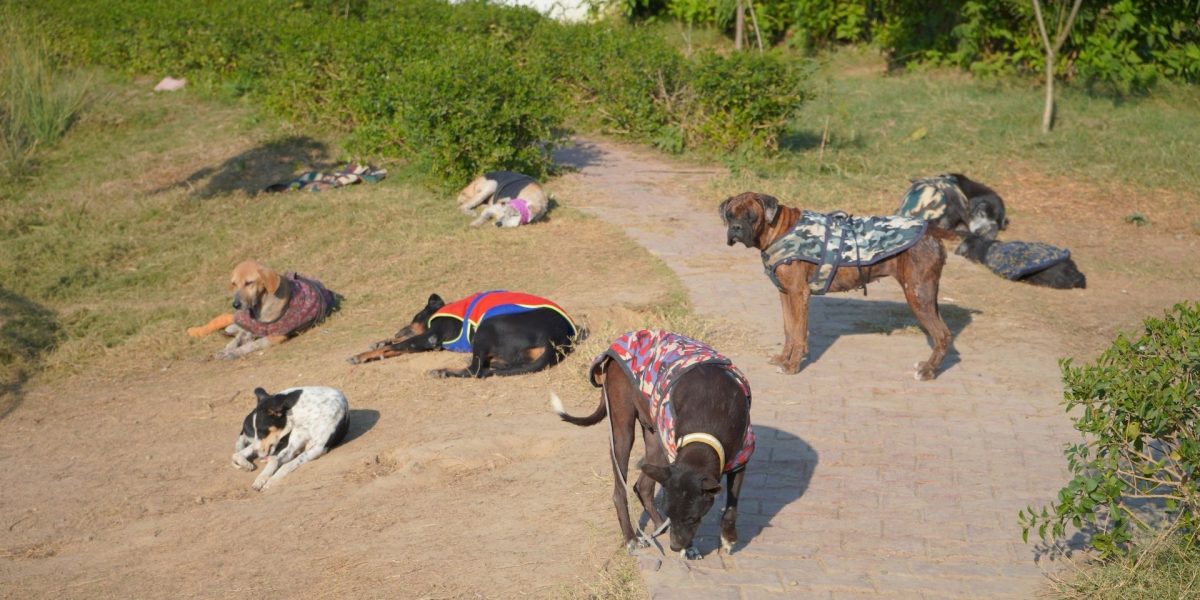
Every year, we witness a rise in conflicts between humans and street dogs. Do you wonder why street dogs bark, chase, or act aggressively? Have you asked about the reason behind their aggression? Every form of aggression in stray dogs originates primarily from fear and survival instincts.
According to animal psychiatrists, dog aggression stems from their deep-rooted fear and memories of past negative experiences with humans. Other reasons may include territorial instincts, pain from injury, or a lack of socialisation.
In a nutshell, stray dogs on the streets exhibit aggressive behaviour as a part of their survival mechanisms. It is a desperate attempt to protect themselves, their territories, their young ones, and their resources. It is a complex behaviour hinting at any perceived threat and lack of control. Animal aggression can be managed effectively with training, finding the root cause, and regular check-ups by a professional veterinary behaviourist.
Animal Welfare Organisations To The Rescue
Well-established NGOs like Kannan Animal Welfare play a vital role in helping curb street dog aggression. NGO teams are instrumental in designing constructive programs such as animal birth control, sterilisation, and vaccination drives, creating public awareness, fostering and adoption of strays, rehabilitation of rescued dogs, rabies control, and promoting compatible coexistence with human beings.
Reputed animal welfare charities often partner with state and local government bodies to implement specific humane and sustainable management programs to reduce human-animal conflict.
Understanding Street Dog Behavioural Patterns
- Fear & Anxiety – The fear of strangers, loud noises, and sudden jerky movements can scare dogs. When they bark or growl, it is their way of expressing fear and saying ‘stay away from us.’
- Territory Marking – Dogs are territorial animals. They tend to establish invisible boundaries wherever they can find food and shelter. An unfamiliar person in their territory is marked as an intruder and chased away with loud barks as a defensive mechanism.
- Survival Needs – A stray dog may be hungry, unwell, or injured. This can make them aggressive or irritated when approached. Similarly, a mother dog being naturally protective of her puppies may become aggressive when humans approach her litter.
- Natural Instincts – Dogs exhibit an instinct to chase quick-moving vehicles or even running people. They may feel it is a game with no malicious intent, but humans often get scared by such actions.
- Poor Social Skills – Street dogs that have been hurt and abused by humans may remember their trauma and view people as threats. They may become socially wary and always remain aloof or wary of humans.
- Pack Confidence – Dogs in packs can behave in a confident and energetic way. They may engage in extreme territorial behaviour and quickly become aggressive.
- Loneliness – Like humans, dogs can also become lonely or bored. They may chase unknown people or vehicles to release some energy or to receive some desperate attention.
Staying Safe Around The Stray Dogs In Your Area
Depending on your place of stay, you may encounter a few or many street dogs daily. While some places may have a large number of strays, some areas will have fewer numbers of street dogs. When there is no initiative taken to address such issues, both humans and dogs may face numerous challenges. In such a scenario, humans need to be aware of certain dos and don’ts and know more about street dog safety tips.
Myth vs Fact
Myth: Street dogs attack without reason
Fact: Most aggression is fear-driven or situational
Myth: Feeding dogs increases aggression
Fact: Responsible feeding reduces stress and conflict
Let us go through some salient points concerning street dog safety tips:
Do Not Run – The golden rule to remember is never to run away suddenly from a stray dog. Running is an action that can trigger a dog’s basic hunting instinct, which makes them chase you. It is advisable to just walk away in a normal way. If you are on a bike or scooter, you can slow the vehicle and wait for the dog to go on its way.
Confronting a Pack – Dogs are typically pack animals living in small or large groups. They stay in packs to protect each other. If you are walking alone or with someone and spot a pack, it is best not to go near them. Dogs, being territorial, may try to confront and bark if they feel threatened. One should be very careful at night, when there is less visibility and greater potential for aggressive behaviour.
If you accidentally wander into a pack, you need to stay calm and walk away slowly. Avoid shouting or making sudden movements. Making eye contact with the dogs is also not advisable, as it can trigger their instinct to fight.
Sending Wrong Signals – Dogs can read your body language. They may find your fearful or protective behaviour abnormal and threatening. Some of these include shouting, running, waving your arms, staring at them, or walking towards them. It is better to avoid these actions and instead send calming signals.
Calming Signals – If you meet an unfamiliar street dog, do not send threatening signals. Try sending cool or calming signals like standing sideways, relaxing your posture, yawning slowly, and avoiding eye contact with any dogs. If you are comfortable, you may let them come near and sniff you. The dog should approach you voluntarily; it is best not to go near it on your own.
Help From Locals – If you feel fearful or threatened by strays in the street, you can ask the locals for help or assistance. Dogs will respond favourably to someone they know. Local people can control the situation by giving simple commands to the strays. Local animal welfare centres can be approached; these professionals can offer guidelines on street dog safety tips.
Feeding Stray Dogs Rules
Rules for feeding stray dogs focus on feeding in clean and designated areas. Individuals from society or animal-lover groups can participate and chalk out feeding plans. Feeders should be a part of an NGO or coordinate with one under specific guidelines.
Primary Guidelines For Feeders
- Allotted Space – Feeders are allowed to feed in approved and specific areas only. It should be away from busy roads, footpaths, and children’s play areas. Usually, feeding spots are chosen near boundary walls and other remote areas.
- Cleanliness – Feeders should maintain some cleanliness at the feeding area. They should not litter the place and dispose of all leftover food.
- Other Programs – Feeders can coordinate with animal welfare teams and help to sterilise and vaccinate street dogs. This can help curb unwanted stray populations and gain community acceptance.
- Feed Time – It is best to choose early mornings or late evenings as feeding time. Selecting such quiet hours assures less hassle for residents living nearby.
- Safe Food – Dog feeders must avoid giving unhealthy and unsafe foodstuffs, including chocolate, dairy, grapes, garlic, onion, and sugar-laden items.
- Legal Right – All street dog feeders must understand the fact that feeding is legally permitted, and it is a crime to harass genuine feeders. The Resident Welfare Association can direct feeders to specific locations, but cannot ban the right to feed.
The Importance Of Giving Rabies Vaccination For Street Dogs
Rabies is a killer disease, and it is crucial in view of animal and public health safety that street dogs are duly vaccinated to establish herd immunity. Rabies virus spread can be easily prevented by vaccinating dogs. Several reputed animal welfare organisations, such as Kannan Animal Welfare, are actively involved in vaccination programs for stray dogs.
Vaccination Drives – Highlighting Features
Rabies vaccination for street dogs is a humane and ethical way to improve the quality of stray dogs and also the local communities where they reside. To prevent human fatalities, it is necessary to vaccinate dogs as Rabies is a fatal disease. Vaccination prevents zoonotic transmission of the disease from dogs to humans.
The deadly virus loses its hold when it struggles to find new victims or hosts. Vaccinating a large population of dogs can achieve herd immunity. These programs also offer safety to home pets and animals in the wildlife areas, thus protecting other animals. Mass dog vaccination drives can lessen the economic burden of costly treatment procedures and help in managing rabies outbreaks in society.
Prominent Street Dog Programs
NGOs in India offer critical services, including rescue operations for street dogs. Homeless dogs are rescued and given first aid plus emergency vet care. ABC or Animal Birth Control is one of the essential plans that is included in the medical care plans. The spaying and neutering of stray dogs and administering anti-rabies vaccination (ARV) are also necessary. Such efforts help in eliminating the spread of rabies disease and managing the unchecked breeding of the street dog population.
Prestigious NGOs in India
Kannan Animal Welfare is a pioneer in mass sterilisation of street dogs. KAW programs work on all major issues concerning street dogs’ welfare. From rescue operations, spaying and neutering, local stray feeding, to overseas rehoming, everything is taken care of.
Conclusion:
Year after year, we hear increasing cases of dog bites and tales of animal aggression. However, we as humans fail to understand that the primary fault lies with us. Our lack of compassion and understanding can be some of the main causes.
Understanding dog behaviour can be a step towards preventing such accidents. Humans interacting with street dogs should be a peaceful and conflict-free process. With the active efforts of animal welfare communities and animal care groups, humans and street dogs can foster a harmonious and risk-free environment. As a compassionate community, we need to replace fear and hostility with knowledge and empathy.
FAQs
Community dog feeding guidelines have been set up to create a sense of balance between animal welfare and public safety. Feeders have to follow certain protocols like good hygiene, safe location, and the well-being of the street dogs. Feeding animals is termed a legally protected act in our country. It is considered the moral and constitutional responsibility of every citizen. People have to adhere to dogfeeding guidelines as promoted by local animal welfare communities and legal bodies.
To assist and help a helpless, injured stray dog, you can assess its condition and then try calling the local animal helpline numbers. Contacting animal rescue centres for professional aid is a wise decision. Reputed local NGOs can offer speedy help for injured dogs.
While waiting for professional help from a local rescue team, you may offer basic first aid with clean water and wrapping clean strips of clothing over the injured area. You can use an old but clean blanket to cover the stray and keep it relatively warm. If it is a friendly homeless stray, you may slowly move it to a quiet and safe place away from bustling traffic.
While it is highly recommended to keep calm and behave peacefully, there may be instances where you feel extremely threatened. In such circumstances, you can pretend to pick a rock or a stick from the ground. Sadly, just pretending to throw a rock or stick can make the strays run away.
You may participate in street dog programs by donating in cash or kind, volunteering, adopting a stray, getting involved in sterilisation drives, and raising awareness in the general public through social media.
Street dogs bark, chase, or act aggressively mainly due to fear, territorial instincts, past trauma, hunger, pain, or the need to protect their puppies. These behaviours are survival responses, not acts of unprovoked aggression.
No. Street dogs are not naturally aggressive. Most aggressive behaviour is defensive and triggered by perceived threats, unfamiliar people, loud noises, or previous negative experiences with humans.
Street dogs often chase moving people or vehicles due to instinctive chase behaviour, territorial defence, or sudden movement that triggers their survival response rather than an intent to harm.
If a street dog barks at you, remain calm, avoid eye contact, do not run, and walk away slowly. Sudden movements or panic can escalate the situation.
People can stay safe around street dogs by staying calm, avoiding sudden movements, not invading their territory, understanding dog body language, and respecting their space.