

You give ₹500. So where does it actually go?
At Kannan Animal Welfare, every rupee feeds a bowl, pays a vet bill, or keeps a shelter running for 450 animals with nowhere else to turn. Here’s the honest breakdown, no vague promises.
Where does my donation go? The short answer
Your donation to KAW pays for four things: emergency rescue and surgery for critically injured street animals, daily meals for 250 residents and 200-plus street dogs, spay and neuter drives that stop the suffering at its source, and lifelong care for animals who can’t be rehomed. That’s it. No middlemen.
We feed 450 animals every single day. Not most days. Every day, for 11 years, weekends and festivals included. That number alone tells you where the bulk of the money goes. Into bowls.
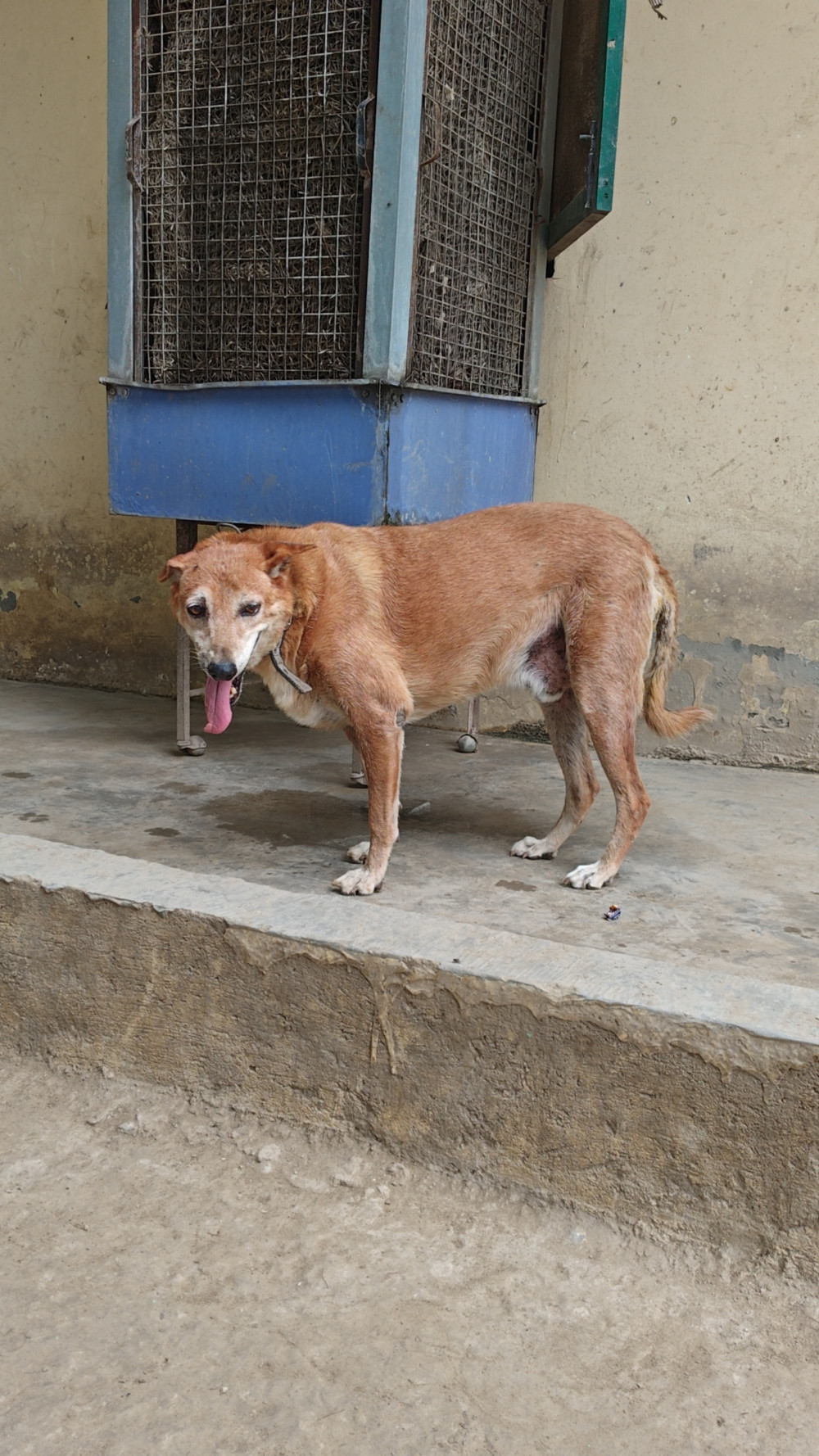
What your donation actually pays for
01
An injured dog comes in off a Delhi road. First the rescue, then the vet, then weeks of medicine and bandaging before that animal is stable. Emergency care is the most unpredictable cost we carry. Some weeks bring one case, some bring twenty. KAW fields 100 to 200 distress calls a week.
02
Food is the steady, non-negotiable cost. Rice, chicken, supplements, clean water, twice a day, 450 mouths.
03
Then there’s spay and neuter, the least dramatic line on our budget and arguably the most important. One sterilised female prevents dozens of unwanted pups from being born onto the street. It’s how you shrink the problem instead of mopping it up forever.
04
And upkeep. Kennels, bedding, blankets, electricity, and the salaries of the people who clean and feed and medicate at 6 am. Shelters don’t run on goodwill alone; they run on paid, reliable hands.
05
Finally, the residents who never leave. Bala is paralysed and can’t survive on the street. Tinda has been with us since 2016. Suvira needs ongoing kidney care. Around 250 animals live at KAW permanently because rehoming isn’t an option for them, and their care is a promise we made for life.
What different amounts do (honest ranges)
These aren’t marketing numbers. They come straight from what we actually spend, and from the sponsorship amounts on our own donation pages. Every gift goes into a common care pool, so your money supports the cause you picked and covers the animals nobody sponsored.
What your donation buys
₹300
A street-feeding round for roughly 10 dogs
₹750
One week of food, shelter and care for a resident dog
₹1,500
About 50 street dogs fed, or two weeks of resident care
₹3,000
A full month of care for one resident, or half a day's meals at a centre
₹6,000
A full day of meals for every animal at one shelter centre
Monthly / larger
Ongoing rescue, surgery and spay-neuter drives — the costs that never stop
Surgery and emergency treatment costs vary case by case, so we won’t quote a flat figure. A hit-and-run dog needs far more than a routine sterilisation. Recurring monthly gifts are what let us say yes to the hard cases without hesitating.
₹750 feeds and shelters a rescued dog for a week.
Cancel anytime, tax receipt included.
How KAW stays accountable to you
Section 8 non-profit
Trust with a stranger’s money has to be earned, not assumed. KAW is a registered Section 8 non-profit — the structure Indian law reserves for organisations that put every rupee back into the mission, with nothing paid out as profit.
12A, 80G & 501(c)(3)
We’re registered under 12A and 80G, so your Indian donation is tax-deductible. Add your PAN when you give and your receipt follows. Overseas donors give through our US 501(c)(3) for their own tax benefit too.
Transparent giving
Donations run through Donorbox, not a cash box. Sponsor a resident and you get a written update before the 15th of every month, often with photos. If your sponsored dog is rehomed or passes away, we write to you and move your support to another animal who needs it.
Want to see it before you give? Come visit the Kapashera sanctuary and watch 450 animals get fed.
The proof is still wagging
Numbers are easy to type. So here are three animals your kind of donation already paid for.
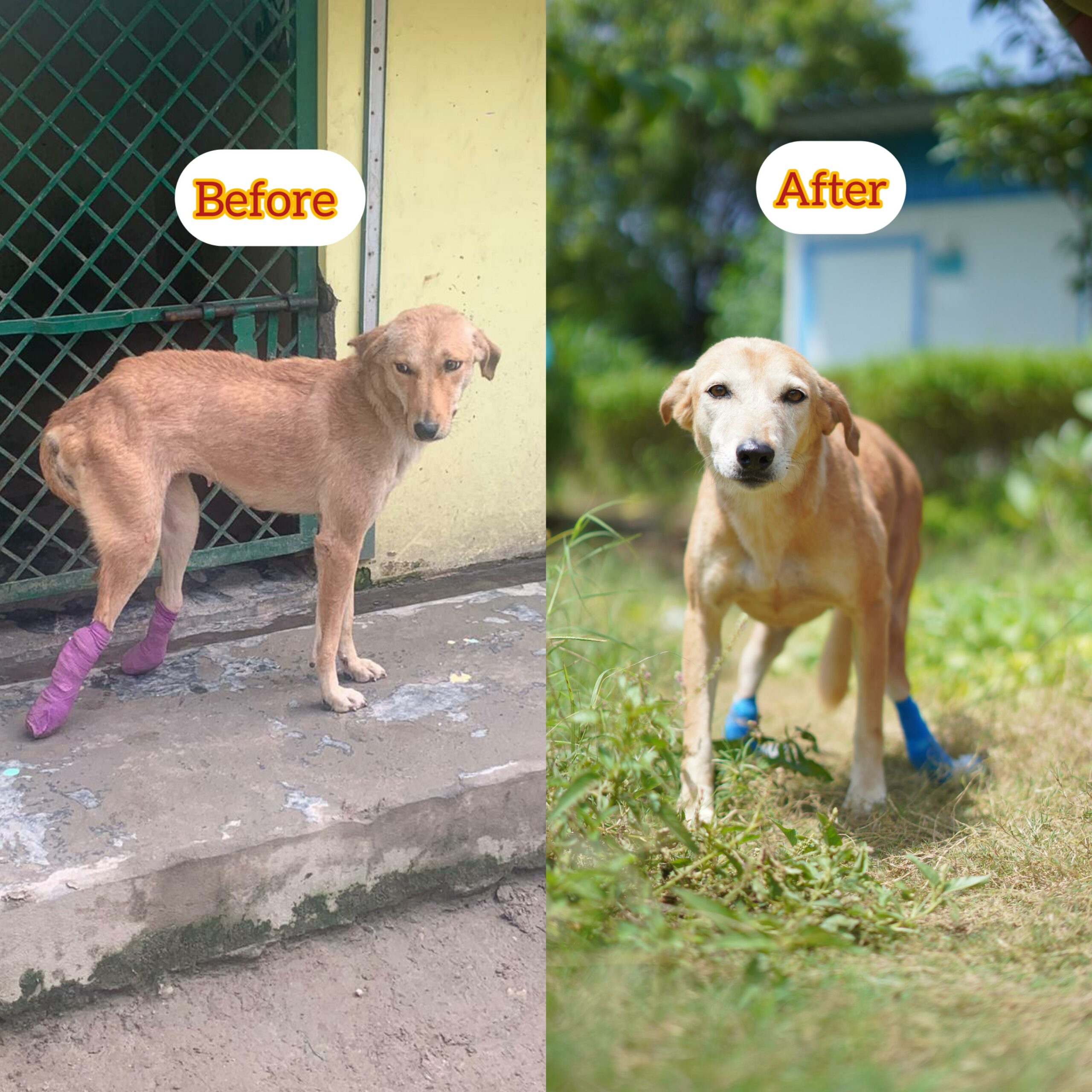
Tinda
Tinda arrived in 2016 with a severe skin infection, barely recognisable. Ten years on she’s still here, healthy, part of the furniture.
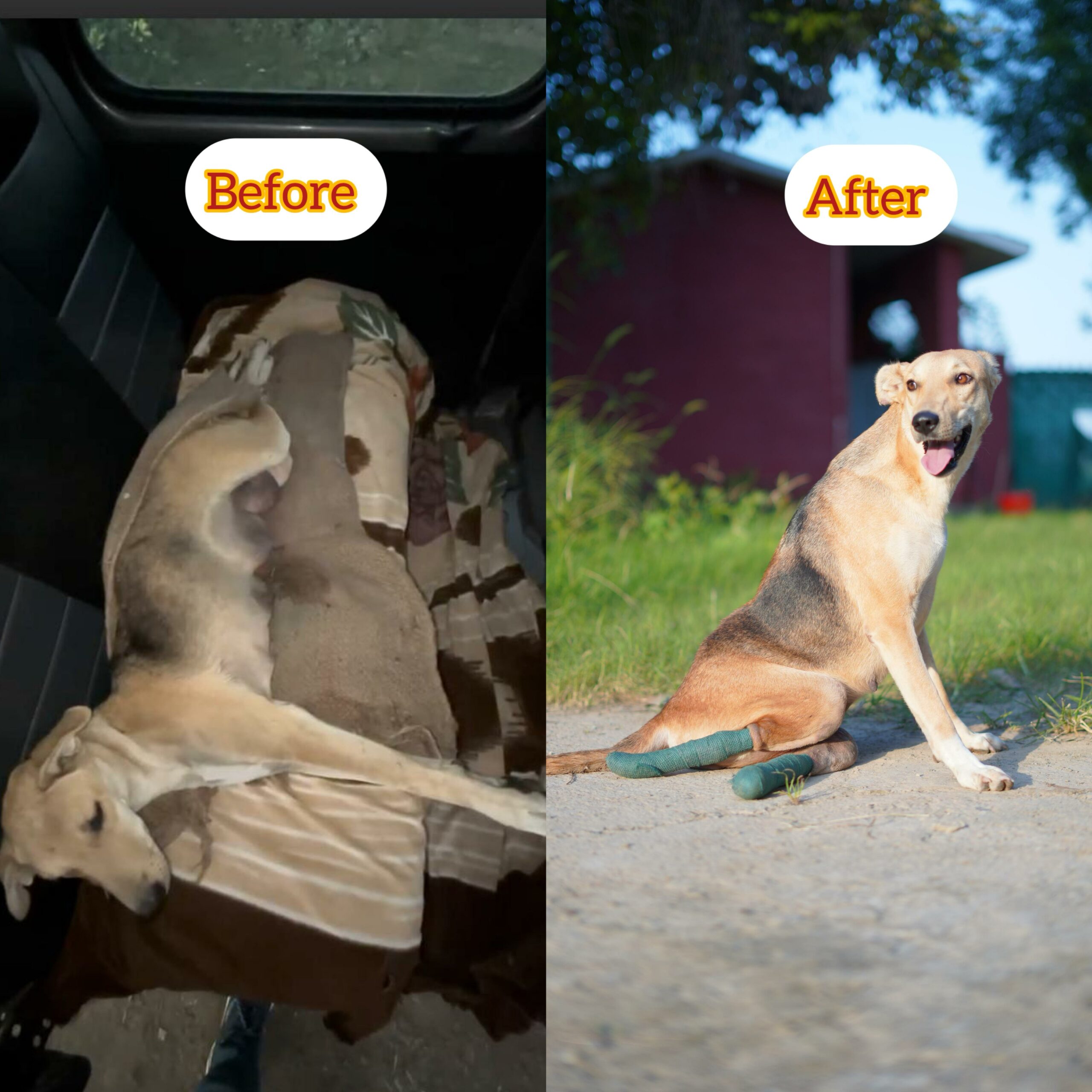
Bala
Bala came in paralysed. There was no fixing it, and the street would have killed him, so KAW made him a permanent resident. He’s one of the happiest dogs on the property.
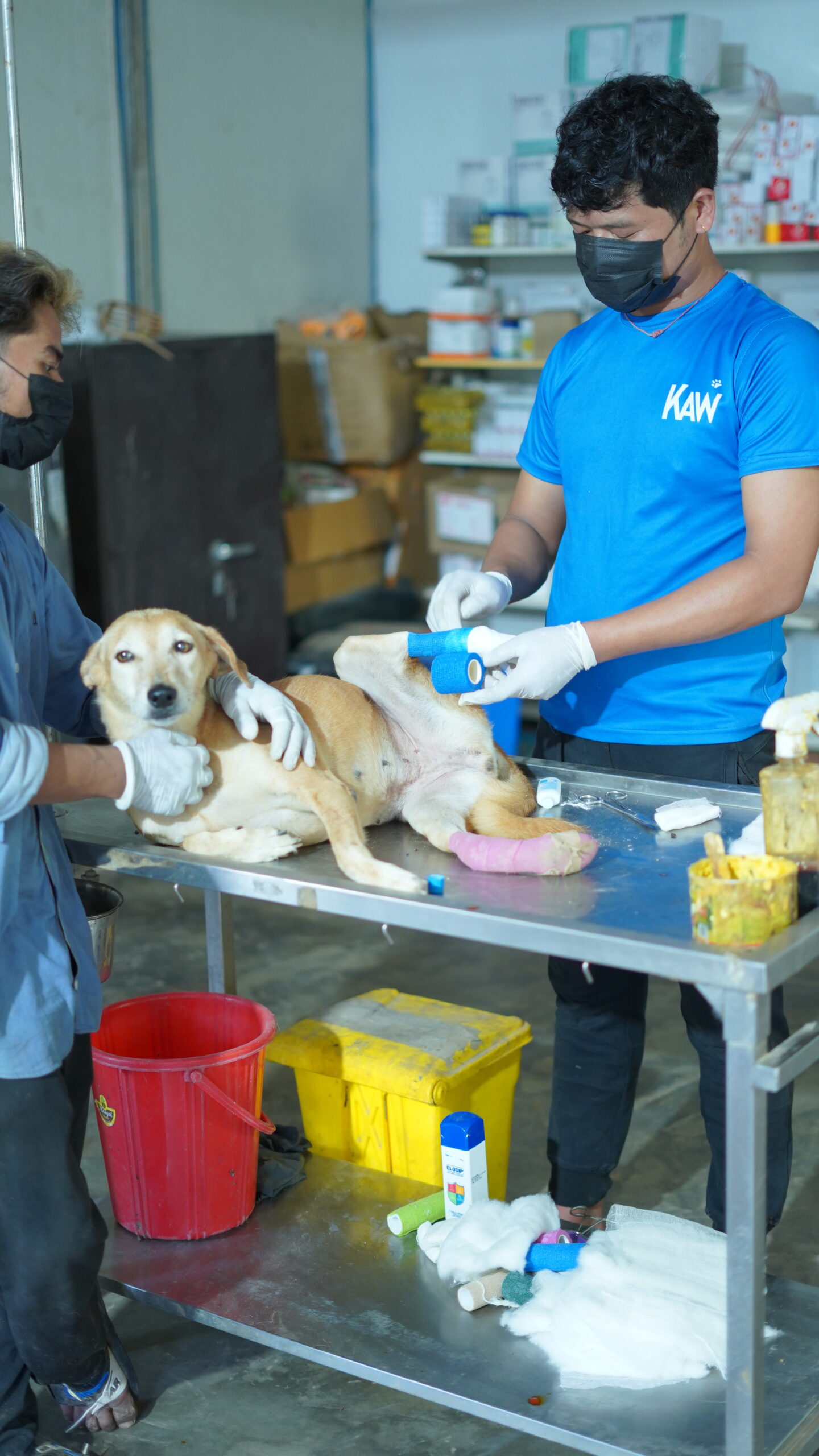
Suvira
Suvira was starving and abandoned when we found her. She’s strong now, though her kidneys need regular monitoring, which she gets for as long as she needs it.
What started in 2015 with 10 rescued animals has grown into a home that has cared for more than 1,000 lives in 11 years. Donor money is the only reason any of that sentence is true.
Frequently asked questions
Straight into animal care: food, emergency rescue and surgery, spay and neuter, shelter upkeep, and lifelong care for permanent residents. KAW is a Section 8 non-profit, so nothing is paid out as profit.
Yes. KAW holds 12A and 80G registration in India, so Indian donors get a tax deduction; just add your PAN when donating. Overseas donors give through our US 501(c)(3) for their own tax benefit.
Yes. Every donation through our Donorbox forms generates a receipt. Add your PAN and address at checkout so your 80G receipt is valid.
You can. Sponsor a meal, sponsor a specific resident, or fund street feeding. All gifts pool into common care, so your chosen dog is covered and so are the ones nobody picked.
Sponsors get a written update before the 15th each month, usually with photos. You’re also welcome to visit the Kapashera sanctuary and watch the animals being fed yourself.
Fund a day these animals get to live through.
80G and 501(c)(3) tax benefits. Monthly updates. And a 24×7 helpline on +91-9999670042 if you’d rather report a rescue than give.