

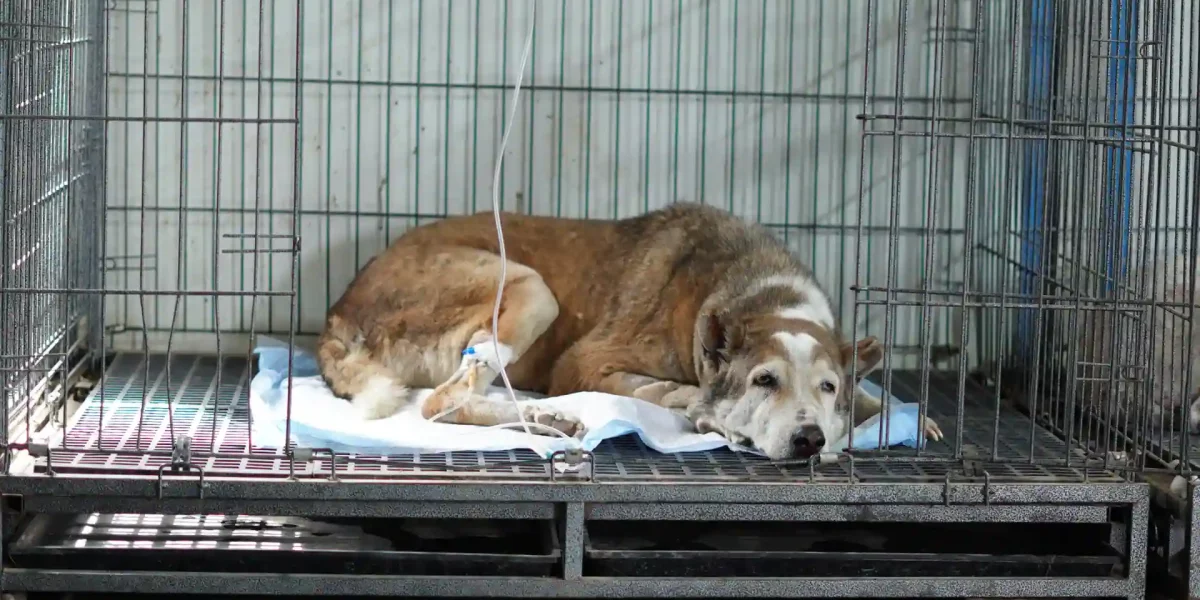
The call comes in at 11 p.m. A dog has been hit by a car near Kapashera, dragging its back legs, snapping at anyone who comes close. A volunteer reaches the spot, throws a sheet over the dog to calm it, and lifts it into the back of a vehicle. That is the moment most people picture when they think about dog rescue. It is also the moment most people stop picturing. The truck pulls away, and in the public imagination the story ends there, with a happy save.
It does not end there. At Kannan Animal Welfare (KAW), that midnight pickup is roughly day zero of a process that often runs for weeks, sometimes for the rest of the animal’s life. The rescue is the easy part to film. What happens after a dog is rescued and treated is the part that actually decides whether the animal survives, recovers, and finds somewhere to belong.
This is the real animal rescue process, step by step, drawn from how KAW runs it at its Kapashera base in Delhi-NCR, where 256 resident animals and more than 200 street animals depend on the team every single day.
Why this stage matters more than the rescue
Here is the uncomfortable truth most feel-good rescue videos skip: pulling a dog off the road is not the hard part. Keeping it alive afterward is. India has an estimated 62 million street dogs, and the country still records between 18,000 and 20,000 human rabies deaths a year, nearly a third of the global total, according to figures cited by WHO and India’s animal husbandry ministry. In 2024 alone, more than 3.7 million dog bites were reported nationally. Numbers that large get treated as a population problem. Rescue work treats them one animal at a time, which is slower, costlier, and far more honest.
A single critically injured stray can need emergency surgery, two weeks of intensive care, a month of physiotherapy, and months of behavioural rehabilitation before anyone can even think about adoption. Skip any of those steps and the dog either dies or ends up back where it started. That is why the post-rescue journey, not the rescue itself, is where an organisation’s competence actually shows.
The animal rescue process, step by step
Below is the path a rescued dog typically travels at KAW, from the distress call to its final home. Real cases rarely move in a clean straight line, but these are the stages every rescued dog passes through.
| Stage | What Happens | Typical Timeframe |
| 1. Emergency Intake and Triage | Report verified via the 24×7 helpline, dog transported with minimal stress, and condition assessed by the rescue team. | Hours |
| 2. Veterinary Treatment and Surgery | Diagnosis, emergency surgery (if needed), wound care, IV fluids, medication, and intensive monitoring. | Days to Weeks |
| 3. Recovery and Rehabilitation | Physical healing combined with behavioural rehabilitation and trust-building. | Weeks to Months |
| 4. Vaccination and Sterilisation | Anti-rabies and core vaccinations administered, followed by spay/neuter surgery once the dog is medically stable. | During Recovery |
| 5. Foster or Sanctuary Care | Placement in a temporary foster home or integration into KAW’s sanctuary alongside other resident animals. | Variable |
| 6. Adoption or Lifelong Sanctuary | Dog is matched with an Indian or international adopter, or remains under lifelong sanctuary care if unadoptable. | Weeks to Permanent |
| 7. Ongoing Care and Support | Post-adoption guidance for adopters, or continued lifelong medical and welfare support for sanctuary residents. | Indefinite |
Stage 1: Emergency intake and triage
Every rescue at KAW begins the same way it has for over 11 years: someone sees a dog in distress and sends a message to the team’s WhatsApp helpline (+91-9999670042) with photos and video. That first information matters. A maggot wound, a fracture, and a neurological case each need a different response, and the team decides the urgency before anyone is dispatched.
Triage is the unglamorous skill that separates rescue from rescue theatre. When the dog arrives, the first questions are clinical: Is it bleeding out? Is it in shock? Can it breathe? A dog that looks merely scared may be hours from death, and a dog that looks half-dead may simply be exhausted. Getting that judgement right, fast, decides what happens next. Safe transport with minimal stress is part of the medicine here, not a courtesy. You can read more about how KAW structures this stage on its rescue operations page.
Stage 2: Veterinary treatment and surgery
Once stabilised, the dog moves into actual treatment, and this is where rescue gets expensive. KAW’s veterinary partners handle everything from setting fractures to amputations to weeks of treating infections that have eaten into bone.
Take Adobe. He arrived paralysed, unable to move, with a deep infection spreading through one leg. There was no clean option. The team amputated to save his life, and Adobe slowly learned to move on three legs. Or take Leader, who came in with a severe maggot-infested wound, too weak to stand. Maggot wounds are grimly common on Indian streets in the monsoon, and untreated they kill. Intensive treatment, daily cleaning, and constant supervision brought Leader back on his feet.
Infectious disease is its own battle. Distemper and parvovirus tear through unvaccinated street populations, and treatment for both is largely supportive: fluids, nutrition, anti-nausea and anti-seizure medication, strict isolation, and round-the-clock monitoring. There is no magic cure. The US shelter that pioneered structured protocols for these viruses, Austin Pets Alive, pushed survival rates toward 85 percent, but only through disciplined intensive care, per Maddie’s Fund. That is the standard rescued dogs need, and it is labour, not luck.
Stage 3: Recovery and rehabilitation, the part nobody films
A dog can be surgically repaired and still be a long way from being rescued. Recovery has two halves, and the second is harder than the first.
The physical half is visible: stitches come out, casts come off, a dog like Adobe relearns balance, physiotherapy rebuilds wasted muscle. Dog rehabilitation at this stage looks like a slow physical-therapy ward, with progress measured in small daily wins.
The behavioural half is invisible and slower. Many dogs arrive terrified, and a dog that has only known hunger, kicks, and traffic does not trust a human hand just because that hand fed it once. Rebuilding that trust can take longer than healing the body. It means sitting near a frightened animal for days without forcing contact, letting it choose to approach, rewarding the first tentative tail-wag. This is the quiet, patient work that no donation video captures, and it is exactly where rescued dogs are won or lost. Push a traumatised dog into adoption too early and the placement fails. Rush this stage and you undo the surgery.
Stage 4: Vaccination and sterilisation
Once a dog is medically stable, it is vaccinated against rabies and other core diseases and, when fit enough, spayed or neutered. This is not an afterthought; it is public health and population control rolled into one procedure.
India’s Animal Birth Control Rules, 2023, notified on 10 March 2023, make sterilisation and vaccination the legally backed, humane method for managing street dog numbers, replacing culling. The country has administered over 101 lakh anti-rabies doses to dogs in three recent years, yet still struggles to reach the 70 percent sterilisation coverage that actually stabilises a population, per government data. Every animal KAW sterilises is one litter, and one disease vector, removed from that arithmetic. KAW’s broader spay and neuter programme carries this beyond rescued individuals into the wider street population.
Stage 5: Foster and sanctuary care
Not every recovered dog goes straight to a permanent home, and the gap is bridged two ways.
Fostering places a dog in a temporary home where it learns what living indoors actually means: stairs, doorbells, leashes, other pets, the strange idea that food arrives reliably. A foster home reveals a dog’s true personality far better than a kennel ever can, which makes the eventual adoption match more accurate.
For dogs that cannot be placed, whether too old, too disabled, or too deeply scarred, there is the sanctuary itself. The KAW Farm Stay and Sanctuary is home to those 256 resident animals, the ones who will never be returned to a street or handed to a stranger. Adobe and Leader are part of that count. Sanctuary life is not a failure of the adoption process; for some dogs it is the kindest possible outcome, a permanent safe place rather than a forced placement that would not hold.
Stage 6: The dog adoption process and overseas rehoming
When a dog is healed, stable, vaccinated, sterilised, and behaviourally ready, the search for a family begins. KAW’s dog adoption process is deliberately not first-come-first-served. The team matches temperament to household: a nervous dog does not go to a chaotic home, a high-energy dog does not go to someone who wants a lap pet.
Many of KAW’s dogs are Indian Pariahs, the indigenous Indie breed that is hardy, intelligent, and badly overlooked by families chasing imported pedigrees. Part of the adoption work is simply persuading people that the dog already on their street is a better companion than the one in a breeder’s catalogue. KAW has completed more than 180 overseas rehomings, sending Indie dogs to families abroad, proof that these dogs travel and thrive far beyond Delhi. Prospective adopters can start at KAW’s adopt a dog page.
Stage 7: Ongoing care, because adoption is not a finish line
The relationship does not end at handover. Good rescue organisations stay reachable, helping new families through the adjustment weeks when a dog is testing boundaries and settling in. And for the sanctuary residents, ongoing care simply never ends, every meal, every vaccine booster, every vet visit, funded year after year for animals who will never be anyone’s pet but are cared for as if they were.
That permanence is the part donors fund without always realising it. A single rescue is a moment. A sanctuary is a standing commitment to 256 lives that produce no adoption-day photo, just a daily bill.
FAQs
It varies enormously. A minor injury may heal in days, while a critical case involving surgery, infection, or trauma can take several months across physical and behavioural rehabilitation. Dogs with neurological damage or deep psychological trauma may need the longest, and some never fully return to placement readiness.
They are not abandoned. Dogs too old, too disabled, or too traumatised for adoption live permanently at the KAW sanctuary in Kapashera, among 256 resident animals, receiving food, medical care, and shelter for the rest of their lives.
Yes. KAW has completed over 180 overseas rehomings, placing Indian Pariah dogs with families outside India. The adoption process includes temperament matching and guidance on travel and settling in.
Vaccination protects the dog and the community from rabies and other diseases, while sterilisation supports humane population control under India’s Animal Birth Control Rules, 2023. Both are standard medical steps before a rescued dog is rehomed.
Do not attempt risky handling yourself. Send clear photos and a video of the animal to KAW’s 24×7 helpline on WhatsApp at +91-9999670042, and the team will assess the case and guide you on next steps.
The save that nobody sees
The lesson of every KAW case, from Adobe on three legs to Leader back on his feet, is that the rescue is the cheapest, fastest, most visible step in a long and largely invisible process. The surgery, the months of trust-building, the sterilisation, the lifelong sanctuary bills, that is where rescued dogs are actually saved, and that is the work that runs on donations rather than applause.
If this is the work you want to get back, there are three direct ways to help right now. Sponsor a meal to feed the sanctuary’s residents for a day. Donate to fund the surgeries and intensive care that bring critical cases like Adobe and Leader through. Or report a case the moment you see an animal in distress: message KAW’s 24×7 helpline on WhatsApp at +91-9999670042 with photos and video, and let the process begin.
Saving one dog will not change the world. But for that one dog, the world changes completely.