

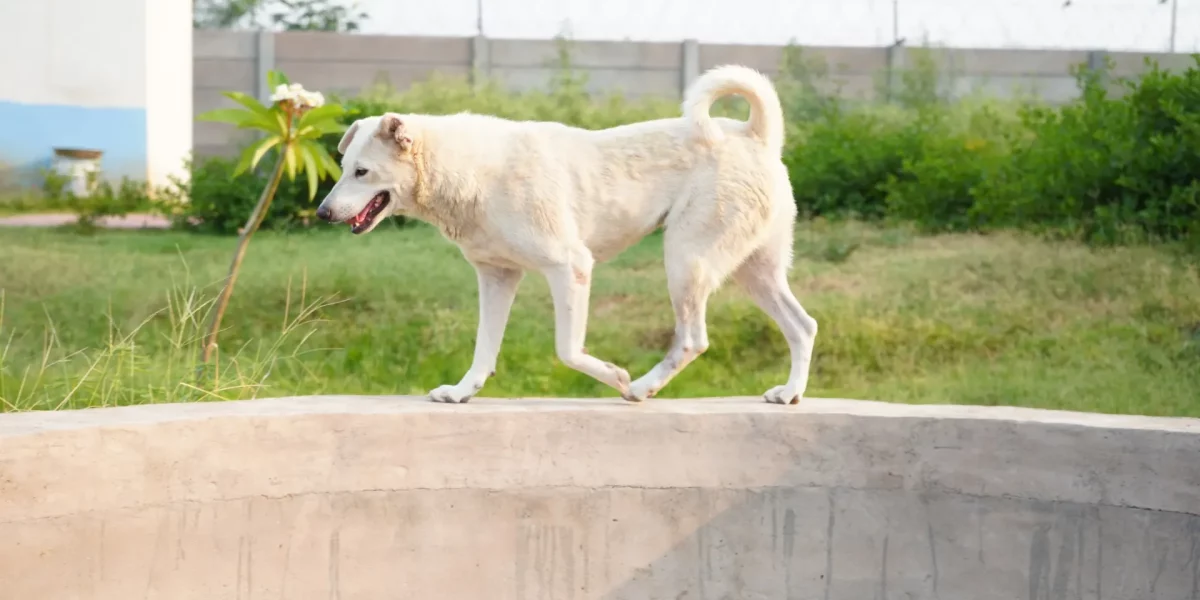
Adobe could not stand when our team reached him. He was paralysed, in pain, and an infection had already eaten deep into one leg. There was no clean version of what came next: to save his life, the leg had to come off. Months later, Adobe moves around the KAW sanctuary on three legs like he was born to it. He is the kind of animal rescue story that does not fit neatly on a poster, because the real ones rarely do. They are messy, they involve a hard veterinary decision at 2 a.m., and they end not with a miracle but with patience.
This is a collection of animal rescue stories, but it is also an argument. Pulled-from-the-brink moments are easy to love and easy to forget. What actually changes a street dog’s life is the unglamorous chain that follows the rescue: surgery, weeks of rehabilitation, sterilisation, and finally a home. At Kannan Animal Welfare (KAW), an 11-year-old Delhi-NCR non-profit, we have learned that the rescue is the first 5 percent. The other 95 percent is where faith in humanity is actually earned.
Why animal rescue stories matter more than the feel-good moment
Animal rescue stories matter because they are the most honest case study we have for whether kindness scales. One dog saved is a good day. A system that catches the next dog, treats it, sterilises it, and rehomes it is what reduces suffering at the street level, year after year.
The scale of the problem in India is not small. The 20th Livestock Census in 2019 counted over 1.53 crore stray dogs nationally, a figure most field workers consider an undercount. Behind that number sits a public-health cost: the World Health Organization attributes up to 99 percent of human rabies transmissions to dogs, and India alone accounts for roughly 36 percent of the world’s rabies deaths. So when people ask whether animal rescue work is sentimental, the data answers plainly. Rescue, rehabilitation, and sterilisation are public-health infrastructure wearing a softer face.
That is the lens we want you to carry through the rescued-animals stories below. Each one is real KAW work. None of it happens without the slow, funded, repeated effort behind it.
Leader and Adobe: two rescued stray animals, two long roads home
The leader arrived too weak to stand, with a maggot-infested wound that had turned critical. Adobe arrived paralysed, his infection already past the point of saving the limb. On paper, both were the kind of cases a busy city walks past every day.
What happened next is the part that does not photograph well. Leader needed intensive medical care, wound management, and constant support before he could hold his own weight again. Day by day, he regained strength and spirit, and today he is safe at the KAW sanctuary, stronger and still healing. Adobe needed an amputation, then weeks of learning to balance, then the quieter work of trusting people again after trauma. Both dogs are alive because someone made a phone call and a team answered it.
These are the inspiring animal stories worth telling honestly. Not because they ended in a fairytale, but because they show what rescue actually costs and what it actually buys. Every one of our rescue operations starts the same way: a citizen spots an animal in distress, sends a message, and our team moves. The romance is in the response time. The rest is medicine, money, and weeks.
The part nobody posts: animal rehabilitation is the real work
Here is the position we will defend. The rescue van is not the hard part. Animal rehabilitation is.
A dog like Adobe does not heal on a schedule. After surgery comes physical recovery, then emotional recovery, which for a traumatised street animal can take far longer than the wound itself. Many dogs reach KAW frightened, defensive, and shut down. Rebuilding that trust is a daily, unphotogenic grind handled by staff and volunteers who show up whether or not anyone is watching.
This is why we are wary of animal welfare stories that end the moment the dog is “saved.” Saved from what, exactly, if it is then warehoused or released untreated? At our Kapashera sanctuary, every day means feeding and caring for 256 resident animals plus more than 200 street animals who depend on us for food, treatment, and shelter. That is the real ledger of a rescue: not one heroic afternoon, but thousands of ordinary mornings.
From rescued to rehomed: animal adoption stories that close the loop
A rescue that does not end in a home is only half finished. Animal adoption stories are where the chain finally closes, and where KAW has built something unusual for an Indian shelter: more than 180 overseas rehomings, placing Indian street dogs with families across the world, alongside steady local adoptions.
Most of our adoptable dogs are Indian Pariahs, the indigenous Indie breed that India has overlooked for decades in favour of imported pedigrees. We will say it directly, as our own writing has argued before in why Indie dogs are better than foreign breeds: the Indie is hardy, intelligent, low-maintenance, and superbly suited to the Indian climate. A formerly frightened street dog, sterilised and vaccinated, often becomes the most loyal companion in the house.
Adoption is not a transaction at KAW. We match each dog to a family that understands its needs, and we stay in touch after placement to make sure the transition holds. When you adopt a rescued dog, you are not just gaining a pet. You are freeing up a slot for the next Leader, the next Adobe.
How a single rescue actually works, step by step
People imagine rescue as one dramatic grab. In practice it is a sequence, and every step has a cost. Here is what one KAW rescue runs through:
| Stage | What Happens | Why It Matters |
| The Call | A citizen reports an injured animal, usually with photos or videos via WhatsApp. | Accurate initial information helps the team assess the situation and prioritize the rescue before arriving. |
| Response | The rescue team reaches the location, often within a few hours. | In severe cases, timely intervention can significantly improve the animal’s chances of survival and recovery. |
| Assessment and Transport | The animal is examined and carefully transported to a veterinary clinic or rescue facility. | Proper handling prevents additional stress and reduces the risk of worsening existing injuries. |
| Treatment | The animal receives surgery, medication, wound care, and, when necessary, intensive care. | This is the most specialized and resource-intensive stage of the rescue process. |
| Rehabilitation | The focus shifts to physical healing and rebuilding the animal’s trust in people. | Recovery often takes time, making this one of the longest and most important stages. |
| Sterilisation and Vaccination | The animal is spayed or neutered and given essential vaccinations, including anti-rabies shots. | These measures help prevent future suffering, control stray populations, and protect public health. |
| Rehoming | The animal is matched with a suitable adopter, either locally or internationally. | Successful adoption provides a permanent home and creates space for future rescue efforts. |
Notice where the difficulty sits. The public sees stage one. KAW lives in stages four through seven.
Why sterilisation is the rescue story that prevents future rescues
The most important animal rescue story is often the one that never has to happen. Sterilisation is how you stop writing tragic first chapters.
India’s Animal Birth Control Rules, 2023 are built on exactly this logic: catch, vaccinate, sterilise, and release stray dogs in place, rather than relocating or culling them. It is the only humane, evidence-backed route to a stable, healthier street-dog population, and it directly cuts rabies risk in the communities that adopt it. Our spay and neuter programme is not the part that goes viral, but it is the part that shrinks the problem instead of just mopping it up. Every sterilised dog is a litter of future street animals that will never be born into hunger.
That is the unsentimental heart of this work. Rescue saves the animal in front of you. Sterilisation saves the ones you will never meet.
FAQs
Mostly, yes. India’s stray crisis is overwhelmingly canine, with over 1.53 crore stray dogs counted in the 2019 Livestock Census. KAW focuses primarily on dogs, including critical injury cases, sanctuary residents, and adoptable Indie dogs, though street animals of other kinds are fed and helped too.
A rescue is the act of removing an animal from immediate danger. Rehabilitation is the weeks or months of medical treatment, physical recovery, and trust-rebuilding that follow. As cases like Adobe and Leader show, rehabilitation is usually the longer and harder part.
Yes. KAW rehomes dogs locally and has completed more than 180 overseas rehomings. Most are Indian Pariahs, sterilised and vaccinated. You can start through the adopt a dog page, and the team will match you to a dog that fits your home.
Send photos and videos of the animal to KAW on WhatsApp at +91-9999670042. Clear images let the team assess the situation and guide you on the next steps before they arrive.
Because rescue treats the symptom and sterilisation treats the cause. Under India’s Animal Birth Control Rules, 2023, sterilising and vaccinating street dogs stabilises the population humanely and reduces rabies, which means fewer animals born into the conditions that create rescue cases.