

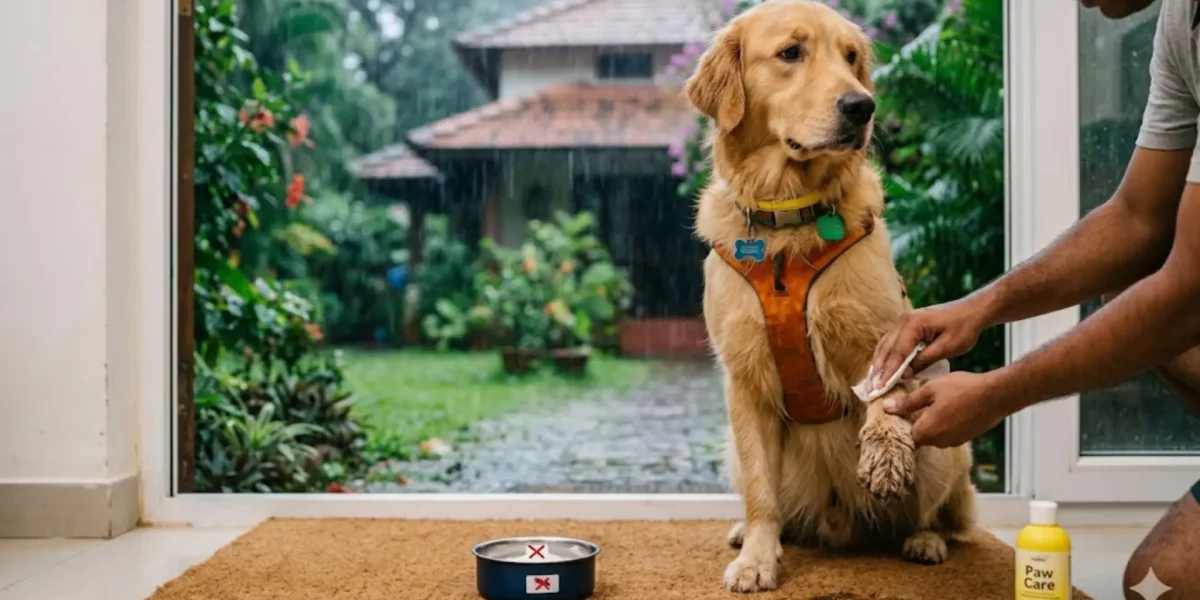
The first heavy shower of the season is a relief for most of Delhi-NCR, but for the 200-plus street dogs that Kannan Animal Welfare (KAW) feeds every day in and around Kapashera, it marks the start of the hardest three months of the year. Wet coats that never dry, paws standing in drain water, and a tick population that explodes overnight: dog monsoon care in India is its own discipline, and most owners only learn it after the first infection has already taken hold.
This guide is built for two readers. One is the pet parent watching their dog scratch at a damp paw on the balcony. The other is the street-dog feeder doing rounds with a packet of rotis and no idea why three of “their” dogs are suddenly limping and feverish. Both face the same monsoon enemies. The difference is access, and that gap is exactly where a small, well-timed intervention saves a life.
What changes for dogs when the monsoon arrives
Heat and humidity together do the damage, not rain alone. Through July and August, relative humidity across north India routinely sits above 80%, and a dog’s coat at that humidity simply stops drying between walks. Moisture gets trapped under the legs, between the toes, and in skin folds, and that warm, dark, damp pocket is where bacteria, yeast, and fungi multiply fastest, according to PetMD’s veterinary guidance on canine yeast infections. Add stagnant water carrying rat urine and a tick season that peaks in exactly these months, and you have a window where four separate problems hit at once.
Here is the information most monsoon articles miss: these threats are not independent. A dog with chronically wet paws develops a yeast infection; the constant licking breaks the skin; the broken skin sitting in floodwater becomes the entry point for leptospirosis. Treating one in isolation is why owners keep going back to the vet. You manage the monsoon, not a single symptom.
Paw hygiene: the five-minute routine that prevents most monsoon problems
Dry the paws and skin folds within minutes of every wet walk, paying attention to the gaps between the toes and the underside of the pads. That single habit prevents the largest share of monsoon skin disease, because the paw is where moisture lingers longest and where street water is dirtiest.
A dog’s sweat glands sit mostly in the paws, so paws stay damp even without rain. After a monsoon walk, wipe each paw with a clean dry cloth, separate the toes, and check the webbing for redness, a yeasty smell, or a thorn. Trim the fur between the pads in June so water has less to cling to. For KAW’s street dogs, feeders cannot towel every paw, but they can avoid feeding spots that force dogs to stand in stagnant water, and they can flag any dog that is licking one paw obsessively, an early sign of paw care rain damage before it becomes a full infection.
Skin infections in the rainy season: hot spots, fungal patches, and what they look like
A dog skin infection in the rainy season usually shows up as one of two things: a fungal or yeast patch (itchy, scaly, often smelly, common in ears, paws, and skin folds) or a hot spot (a red, oozing, painful lesion that appears suddenly and spreads within hours). Both are driven by trapped moisture, and both worsen fast if ignored.
Hot spots, known clinically as acute moist dermatitis, are the monsoon emergency owners underestimate. A dog gets a small itch, licks and chews the spot, and the constant saliva and moisture turn a coin-sized patch into a palm-sized open wound by the next morning. The fix is to clip the fur around it, keep it dry, and see a vet, because secondary bacterial infection is common. A dog fungal infection in the monsoon is slower but more stubborn. Vets typically treat it with medicated baths using chlorhexidine, ketoconazole, or miconazole shampoos, repeated every few days for several weeks. Do not reach for human antifungal creams; many contain ingredients dogs lick off and ingest.
Take a position here: the single most useful thing an Indian dog owner can buy for the monsoon is not a raincoat. It is a microfibre towel and a willingness to use it after every walk.
Ear infections: the problem you smell before you see
Floppy ears trap exactly the warm moisture that yeast and bacteria need. If your dog is shaking its head, scratching at one ear, or the ear smells sour, assume an infection is starting and see a vet rather than pouring anything in yourself.
Indian breeds with erect ears, including the Indian Pariah dogs that make up most of KAW’s residents and rescues, are at lower risk than spaniels or retrievers, but no dog is immune in 80% humidity. Wipe the outer ear dry after baths and walks. Never insert cotton buds into the canal. If you see a dark, coffee-ground discharge, that is a veterinary visit, not a home remedy.
Ticks, fleas, and tick fever: the monsoon’s deadliest threat
This is the section that matters most. Warm, humid monsoon conditions are ideal for ticks and fleas to breed, and a heavy tick load can transmit tick fever in monsoon dogs, a group of serious blood-borne diseases. The two most common in India are ehrlichiosis and babesiosis, and both can be fatal if missed.
Ticks can transmit disease within hours of attaching, so daily tick checks during the monsoon are not optional, the American Kennel Club notes in its January 2026 veterinary guidance on ehrlichiosis. Run your hands over the whole dog, paying attention to ears, between toes, the neck, and under the collar. Remove ticks with a tweezer close to the skin, wearing gloves, and wash your hands afterward.
What ehrlichiosis and babesiosis actually do is different, and the difference matters. Ehrlichiosis, caused by Ehrlichia canis from the brown dog tick, attacks white blood cells; symptoms such as lethargy, loss of appetite, and fever typically appear one to three weeks after the infected tick attaches, per the AKC. In more severe cases owners may see petechiae, pinpoint spots of bleeding under the skin. Babesiosis attacks red blood cells directly and causes anemia, so its tell-tale sign is pale or white gums (healthy gums are pink), along with weakness and dark urine.
Tick fever warning signs that mean a vet visit today, not tomorrow:
| Symptom | What It Suggests | Urgency |
| High fever above 103°F, lethargy | Acute tick-borne infection | See a vet within 24 hours |
| Pale or white gums | Anaemia, likely babesiosis | Emergency, same day |
| Pinpoint red spots on skin or gums (petechiae) | Low platelets, often ehrlichiosis | Emergency, same day |
| Loss of appetite for more than a day | Early tick fever or other illness | Vet within 24–48 hours |
| Dark or coffee-coloured urine | Red blood cell breakdown | Emergency, same day |
| Nosebleed or bleeding that won’t stop | Clotting failure | Emergency, same day |
The good news is that most Ehrlichia infections are treated effectively with antibiotics, typically doxycycline, with a very good prognosis when caught early, the AKC reports, quoting NC State veterinary researcher Dr. Barbara Qurollo. Treatment usually runs about a month. Babesiosis needs different, antiprotozoal medication. This is precisely why guessing at home is dangerous: the two diseases look similar but are treated differently, and only a blood test tells them apart. For the dogs KAW rescues off Delhi-NCR streets in monsoon, tick fever is one of the most frequent reasons a dog goes from “thin but fine” to critically ill within a week, and the work of KAW’s rescue operations team often begins with exactly this presentation.
Leptospirosis: the rain disease that can also infect you
Leptospirosis is a bacterial disease that spreads through the urine of infected animals, especially rats, and thrives in stagnant water and mud after heavy rain. It is zoonotic, meaning a dog can pass it to humans, which makes it the one monsoon disease where protecting your dog protects your whole family.
The American Veterinary Medical Association is direct about the risk: leptospirosis is more common in warm climates with high annual rainfall, and risk rises after heavy rainfall and flooding. Dogs get infected when their mucous membranes or skin wounds contact contaminated water or soil, the AVMA explains, which is why a dog with a cut paw wading through monsoon floodwater is the classic case. Early signs are non-specific: fever, lethargy, loss of appetite, vomiting, and later jaundice, the yellowing of gums and eyes that signals liver involvement. Untreated, it progresses to kidney and liver failure.
There is a vaccine, and the AVMA recommends that all dogs be vaccinated against leptospirosis, with an initial series of two shots four weeks apart followed by annual boosters. If your dog is not yet covered, the start of the monsoon is the moment to call your vet. For feeders, the practical rule is simpler: discourage dogs from drinking from puddles and drains, and wash your own hands after handling any street dog, because this is a disease that crosses species.
Diet and immunity: feeding a dog through the monsoon
A dog fighting off four kinds of infection needs its immune system at full strength, and that starts with clean food and clean water. Monsoon dampness spoils kibble and rotis faster than owners expect, and contaminated food causes the gut upsets that weaken a dog further.
Store dry food in a sealed container, never an open packet, and discard anything that smells musty. Offer fresh, clean water and change it twice a day so it does not become a breeding pool. Feeders doing street rounds should carry food in sealed containers and avoid leaving wet food out to rot, which draws rats, the very carriers of leptospirosis. A dog in good body condition with a healthy coat resists monsoon skin disease far better than an underweight, stressed one, which is one reason KAW’s local stray feeding programme matters most in exactly these months, when a daily meal is also a daily immunity boost.
Shelter for street dogs: the intervention only feeders can make
A dog that can get dry is a dog that mostly avoids the entire chain of monsoon disease. Street dogs cannot towel off, so dry shelter is the highest-impact thing a feeder or RWA can provide.
It does not take much. A raised wooden pallet under an existing shade, a large cardboard or plastic crate turned on its side and weighted down, or permission from a guard to let dogs shelter in a covered stairwell during downpours: any of these breaks the cycle of a permanently wet coat. Place shelters on higher ground away from drains. If you feed a regular pack, you already know which dogs are pregnant, old, or recovering; those are the ones to prioritise for a dry spot. KAW began as exactly this kind of neighbourhood feeding-and-rescue effort in Kapashera before growing into a sanctuary that now cares for 256 resident animals, proof that consistent street-level care is where most rescue stories actually start.
FAQs
Wipe and dry each paw within minutes of every wet walk, separating the toes and checking the webbing for redness or a yeasty smell. Trim the fur between the pads at the start of the season, and avoid letting your dog stand in stagnant drain water, which carries both infection and leptospirosis bacteria.
The earliest signs are lethargy, loss of appetite, and fever, usually appearing one to three weeks after an infected tick attaches. Pale or white gums, pinpoint red spots on the skin, dark urine, or any bleeding that won’t stop are emergencies. See a vet immediately, because a blood test is the only way to tell ehrlichiosis from babesiosis, and they are treated differently.
Yes. Leptospirosis spreads through water and mud contaminated with the urine of infected animals, especially rats, and risk rises sharply after heavy rain and flooding. Dogs are infected through cuts or mucous membranes. The disease is zoonotic and can spread to humans, so vaccination and keeping dogs out of stagnant water are the key defences.
Often, yes, if caught early. The AKC notes most Ehrlichia infections respond well to antibiotics such as doxycycline over about a month, with a very good prognosis when treated promptly. Babesiosis requires different antiprotozoal medication. Delay is what turns a treatable infection into a life-threatening one.
Feed in sealed containers away from stagnant water, provide simple dry shelter such as a raised pallet under shade, do quick tick checks on dogs that let you near, and flag any dog that is limping, feverish, or has pale gums to a local rescue group like KAW so it can be treated before it becomes critical.
No. Over-bathing strips protective oils and leaves the coat wet, which worsens fungal infection. Drying thoroughly matters far more than frequent washing. Use a medicated shampoo only if a vet has diagnosed a skin or fungal infection.
If you do only three things this monsoon, make them these: dry your dog completely after every walk, check for ticks daily, and get the leptospirosis vaccine done. Those three habits prevent the overwhelming majority of monsoon emergencies that fill veterinary clinics from June to September. Everything else in this guide is refinement on those three.
For the street dogs of Delhi-NCR, the monsoon is the season when a feeder’s quick eye becomes the difference between a tick fever caught on day two and a dog lost in week two. If you spot a street dog that is feverish, limping, has pale gums, or is in distress this monsoon, send photos and a location to KAW’s 24×7 helpline on WhatsApp at +91-9999670042, and the rescue team will guide you on next steps. If you would rather support the work that keeps 200-plus street animals fed and dry through the rains, KAW’s stray-feeding and rescue programmes are where a small monthly contribution does the most.
The dogs cannot dry themselves, vaccinate themselves, or pull off their own ticks. That part is ours.
This article is for general guidance and does not replace professional veterinary advice. If your dog shows any of the warning signs described above, consult a qualified veterinarian immediately.