

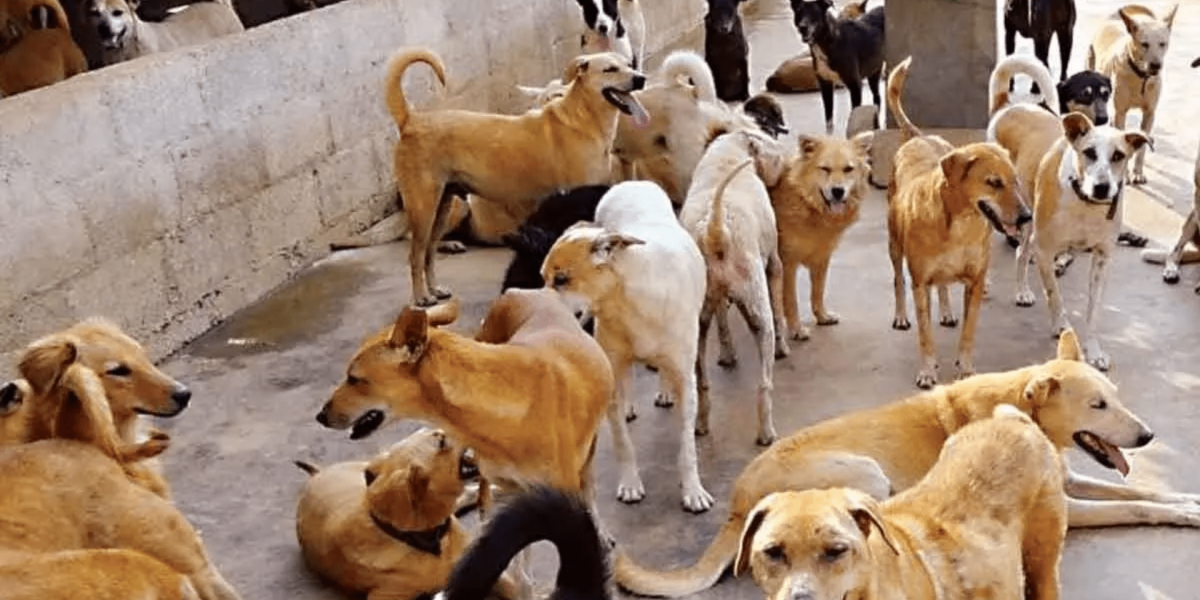
Step out onto a street in India at almost any time of the day, and you will notice them. A dog near a tea stall. Another one just sitting in the middle of everything, as if it belongs there. Sometimes injured, sometimes not. It does not feel unusual anymore, and maybe that is part of the problem. The stray dog population in India is not something hidden. It is right there, in plain sight.
And when you start thinking about the stray dog population in 2026, it feels a bit heavier. Not just numbers going up, but the same situations repeating. The stray dog population in India keeps building like this. Slowly, but consistently.
How Big Is the Problem?
If you try to look at the scale of the stray dog population in India, it does not feel like a small issue anymore. The numbers have been increasing, yes, but what stands out more is how visible it has become. In cities like Delhi, for example, the stray dog population in Delhi is not something you have to search for. It is already there, part of everyday movement. This kind of stray dog population growth India has been seeing is exactly why organisations like KAW keep stepping in again and again.
And honestly, numbers only tell part of the story. The rest of it is what you see daily.
- India is often estimated to have tens of millions of stray dogs, though exact numbers keep shifting
- Over the years, the increase has not been sudden, but steady enough to notice
- In Delhi, the stray dog population is visible across most areas, not limited to one zone
- Many rescue efforts in Delhi-NCR, including KAW’s work, exist because of this constant pressure
Root Causes of the Growing Stray Dog Population
The stray dog population in India did not just grow on its own. It built up slowly, and if you look closely, the reasons are not difficult to find. Stray dog population growth India is more of a result of gaps that were never fully addressed, rather than something unexpected.
There is no single reason here. It is more like small things adding up over time.
- Cities grow fast, but space for animals does not really keep up
- Pet abandonment still happens, even if people do not talk about it much
- Sterilisation exists, but coverage is uneven
- Rules are in place, but enforcement depends a lot on where you are
- Garbage becomes food, and food leads to more breeding
- Awareness is there, but not always strong enough to change habits
Why This Crisis Cannot Be Ignored?
The stray dog population in India does not stay limited to just numbers. It begins to affect daily life in ways people notice, even if they do not always connect it back to the larger issue.
Some of these effects are obvious. Others you only notice if you pay attention.
- Dog bites and rabies risks continue to be a concern in some areas
- Injuries from road accidents are something rescue teams see regularly
- Some people feel unsafe, especially children and older individuals
- Managing the issue adds pressure on local systems and resources
And then there is the part that does not get counted properly. Many of these dogs are simply trying to get through the day.
Humane Solutions: What Actually Works
If you look at the stray dog population in India long enough, one thing becomes clear. There is no quick fix. There never really was. The stray dog population in 2026 still reflects that.
- Animal Birth Control (ABC) Program
Sterilisation and vaccination are not quick fixes, but over time, they help reduce numbers in a steady way. - Rescue & Rehabilitation
NGOs like KAW step in when dogs are injured or unwell, often in situations where no one else does.
Not every method works everywhere. But some patterns do repeat.
- Adoption Drives
Some dogs find homes locally, while others are adopted internationally, depending on the situation. - Microchipping & Database Tracking
This is still developing, but it helps in keeping track of animals in a more organised way. - Community Feeding Programs
Feeding reduces stress and aggression, especially in areas where food is otherwise uncertain. - Public Awareness & Education
Change here is slow, but necessary. Responsible ownership plays a bigger role than most people realise.
When these things come together, slowly, they do make a difference. This is where dog population control India needs to move, not just as policy but as practice.
What You Can Do
The stray dog population in India is not going to reduce on its own. It needs people to step in, even in small ways. Not everything has to be big. Small actions count more than people think.
- Adopt instead of buying, if that is something you are considering
- Support organisations like Kannan Animal Welfare when you can
- Volunteer, even if it is just once in a while
- Talk about it. That matters more than it sounds
Conclusion
The stray dog population in India may feel overwhelming at first. It usually does. But that does not mean nothing can change. Some change is already happening, even if it is not always visible immediately.
What seems to matter most is consistency. Not one big action, but many small ones. That is usually how things shift.
FAQs
The number of stray dogs in India is estimated to be tens of millions, but this is not always the same, and the number always changes depending on the location.
This has not come overnight, but it has gradually grown and has been boosted by urbanisation, food supply by garbage, low sterilisation and loopholes in the implementation of the available policies that control the animals.
It is estimated that the number of stray dogs has not decreased drastically in 2026, and the areas where active sterilisation and rescue have been applied will be better gradually.
The increase in the population of stray dogs in India does affect the day-to-day life in terms of safety, road accidents and exposure that people have with animals in the common urban places.
The number of stray dogs in Delhi is rather conspicuous, and in the majority of the places, it is possible to see the dogs, which is why the process of rescuing and feeding them in the region is endless.
Yes, India can control the population of dogs in humane means such as sterilisation, vaccination and adoption that are more sustainable in the long term as compared to the processes that are destructive.
Sterilisation keeps breeding in check, minimizes the violence of mating, and keeps the number of stray dogs at a slow rate without causing any harm to the animals.
Even the NGOs have their part to play in the rescuing, medical support, feeding and adoption programmes and the long-term solutions that involve sterilisation and awareness programmes.
The stray dogs are left to starve, with untreated cuts, bad weather, and road accidents, which means that they would struggle to survive and would die sooner in most instances.
People can contribute through adopting dogs and sponsoring the NGOs, volunteering and creating awareness in their community on the appropriate pet keeping.