

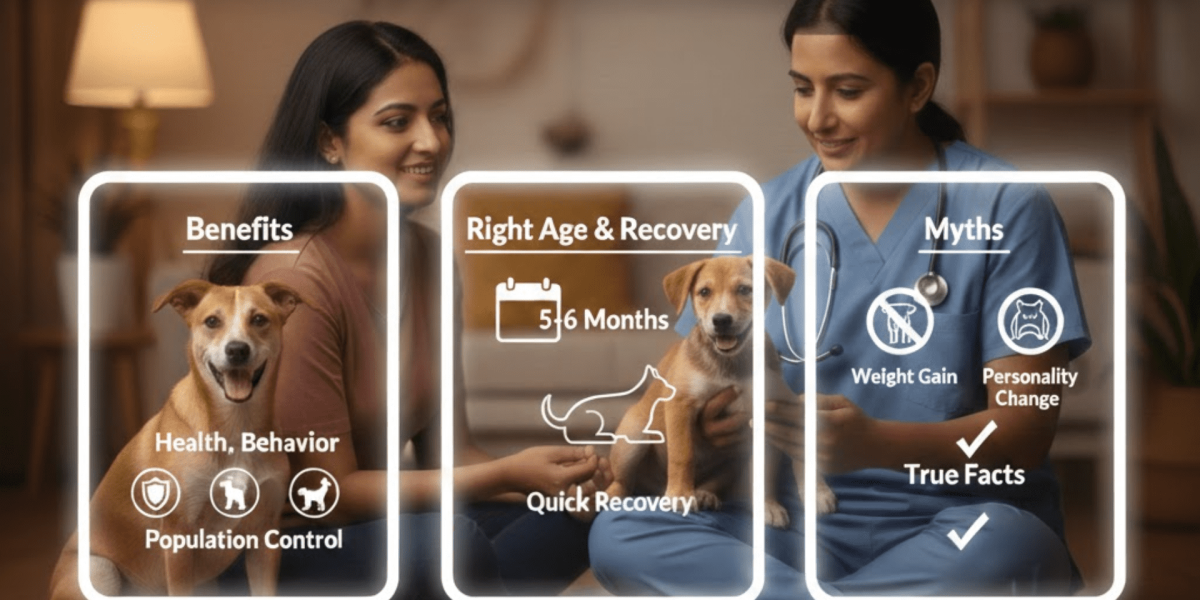
India’s street dog population keeps rising, especially across dense urban pockets like Delhi-NCR, where food sources are easy. Rescue teams and animal welfare organisations like Kannan Animal Welfare see the fallout every day in a way most people never do. They find injured mothers trying to feed litters on broken pavements, plus abandoned puppies left near markets and colonies. They also respond to road accidents that happen when dogs chase, mate, or wander through traffic without safety measures.
This is where dog neutering becomes a humane step that protects animals while easing pressure on neighbourhoods. Many people assume that spaying and neutering are only for owned pets, yet community dogs need it even more. When dog sterilisation is done through structured, rescue-led programs, suffering reduces steadily over time. In this guide, dog neutering is explained through benefits, the right age, recovery basics, and the myths people still repeat.
What Is Dog Neutering? A Simple Explanation
Dog neutering is a straightforward veterinary procedure that prevents a male dog from making puppies. In simple words, it stops breeding while the dog continues eating, playing, and living normally. Many animal welfare foundations like Kannan Animal Welfare with medical units do this regularly as part of humane population control for community dogs. Dog sterilisation will also be conducted in a number of neighbourhood drives along with anti-rabies vaccination, which will not only help in the protection of health but also in the reduction of future litters. The majority of dogs are sent home and recover with a few aftercare steps.
- Prevents unwanted litter.
- Reduces mating-driven aggression.
- Supports humane street dog population control.
Neutering Dog Benefits: Lessons from Rescue & Rehabilitation Work
Rescue and rehabilitation teams in India learn the street dog story the hard way, not through posts online. They pick up males with deep bite wounds after mating season fights, and they treat mothers who are thin after repeated litters. They also find abandoned puppies near markets, and many do not survive unless someone steps in quickly today. When breeding stays unchecked, dogs roam farther for mates, and that roaming often ends in road injuries near busy crossings. That is why dog neutering is seen as prevention, because it reduces the triggers that push dogs into risky behaviour. Many foundations also advocate spaying and neutering for community dogs, because the change is visible in the same lanes within months. After a few consistent drives, dog neutering helps reduce new puppies, plus it eases pressure on feeders, shelters, and clinics. Over time, neutering dog benefits become practical, because fewer fights mean fewer infections, and calmer packs mean fewer complaints from residents.
- Controls the stray population humanely.
- Reduces risk of reproductive cancers.
- Lowers roaming behaviour, preventing accidents.
- Minimises territorial aggression and street fights.
- Contributes to calmer community interactions.
Across Delhi-NCR, sterilisation drives combined with rescue support and vaccination by Kannan Animal Welfare have improved welfare steadily.
What Is the Right Age for Dog Neutering?
| Dog Type | Suggested Age | Special Considerations |
| Small Breeds | Around 6 months | Early maturity |
| Medium Breeds | 6–9 months | Standard range |
| Large Breeds | 9–12 months | Bone development |
Dog Neutering Recovery: Care After Surgery
Most people expect instant normal behaviour, yet dog neutering recovery usually takes about 7 to 14 days with calm handling. The initial days are the most important since the swelling may increase in case the dog jumps or runs too early. Rescued dogs in shelter medical units are usually put under 24-hour observation, and therefore, pain, appetite, and temperature variations are observed early. The same applies at home, since responsible monitoring is much easier to heal, and minor problems are avoided from growing out of proportion. Neutering of dogs is a quick exercise; however, the aftercare will define how comfortable the dog will be during the week.
- Provide a clean, quiet resting area.
- Restrict physical activity.
- Check the incision site daily.
- Complete medication course.
- Follow-up vet check if needed.
Dog Behaviour After Neutering: What Changes Can You Expect?
Most individuals closely monitor the dog after surgery and enquire whether the dog will change overnight. The behaviour of a dog following neutering is more predictable in most instances since the amount of roaming decreases within the following weeks. The dog tends to use less time in seeking mates and therefore nightly roaming, and unexpected escapes can be minimised. Mating-based aggression can also decrease, and this implies that there would be fewer stressful situations around the food areas and street corners. Meanwhile, neutering a dog does not alter the basic personality of the dog, and thus, a docile dog remains docile. It is common in rescue centres to find that dogs that have been rehabilitated are easier to handle in the process of recovery, particularly when there is an improvement in routine and safety. Nevertheless, training and environment influence behaviour on a daily basis, and as such, the consistency of care is more significant than assumptions.
Common Myths About Dog Neutering in India
- Myth: It is harmful to the dog. Reality: When performed by qualified veterinarians, it is safe.
- Myth: Dogs must reproduce at least once. Reality: There is no medical necessity.
- Myth: It causes weakness. Reality: With proper nutrition and care, dogs remain healthy.
These myths are viral as they are heard by people and become evidence of all dogs. Welfare organisations such as Kannan Animal Welfare conduct awareness programs in colonies and schools and they state the facts in a patient manner. When the communities learn more about dog neutering, they will encourage sterilisation campaigns and discontinue accusing dogs of issues that arise due to irresponsible breeding.
Awareness & Sterilization Programs: A Community Responsibility
When living in Delhi-NCR colonies, the first question which comes to our mind is how to coexist with community dogs without daily tension. There are awareness programs which focus on humane behaviour, and hence residents learn what helps dogs stay calm near homes. If you are unsure about street dog issues, then it becomes difficult to know what action actually reduces conflict. For example, structured drives combine vaccination with feeding support, so dogs are handled safely and returned to the same area. OOn the other hand, rescue organisations like Kannan Animal Welfare working in critical care, adoption, and overseas rehoming know that prevention creates sustainable impact.On the other hand, rescue teams see the cost of delay through abandoned puppies and exhausted mothers.
Hence, dog neutering plus spaying and neutering are treated as shared responsibilities, not private choices. Keep on reading local notices and support community sterilisation efforts in your area.
Conclusion: A Humane Step Toward Responsible Animal Welfare
When people talk about street dogs, the first question which comes to our mind is why the numbers keep increasing. There are many reasons, yet unchecked breeding is the one cause that repeats in every neighbourhood. Hence, dog neutering becomes a humane step which protects pets and community dogs from suffering. The neutering dog benefits include fewer unwanted litters, lower roaming, plus fewer fights that end in injuries. On the other hand, rescue teams see the cost of delay through abandoned puppies and exhausted mothers. Speak with a veterinarian, choose timing, and support sterilisation programs by Kannan Animal Welfare that reduce suffering long term.
FAQs
When people hear about surgery, the first question which comes to our mind is whether it is safe. In most cases, dog neutering is safe when a qualified veterinarian uses proper anaesthesia plus sterile procedures. If the dog is healthy, then recovery is usually smooth with basic aftercare and timely follow ups.
The first thing that comes to our mind when we decide on the appropriate time is whether the dog is too young. Most dogs take 6 to 9 months, but breed size and health may alter the duration, according to many vets. In case the dog is weak, then stabilising health should come first.
When people worry about behaviour, the first question which comes to our mind is whether the dog will become dull. In most cases, the personality stays the same, yet roaming and mating driven aggression may reduce over time. If training and routine are stable, then behaviour often becomes easier to manage.
When the procedure is done, the first question which comes to our mind is how many days the dog needs rest. Dog neutering recovery usually takes 7 to 14 days, depending on activity control plus wound care. If the incision is kept clean and medicines are completed, then healing stays on track.
When people see sterilisation drives, the first question which comes to our mind is how street dogs are handled safely. Many welfare organisations plan neutering alongside vaccination, and they monitor dogs in medical units before release. If the community supports feeders and follow ups, then results improve steadily over months.
When this myth comes up, the first question which comes to our mind is whether it is medically required. There is no medical necessity for a dog to reproduce once, and vets do not recommend it as a health step. If nutrition and care are proper, then neutered dogs remain active and healthy.