

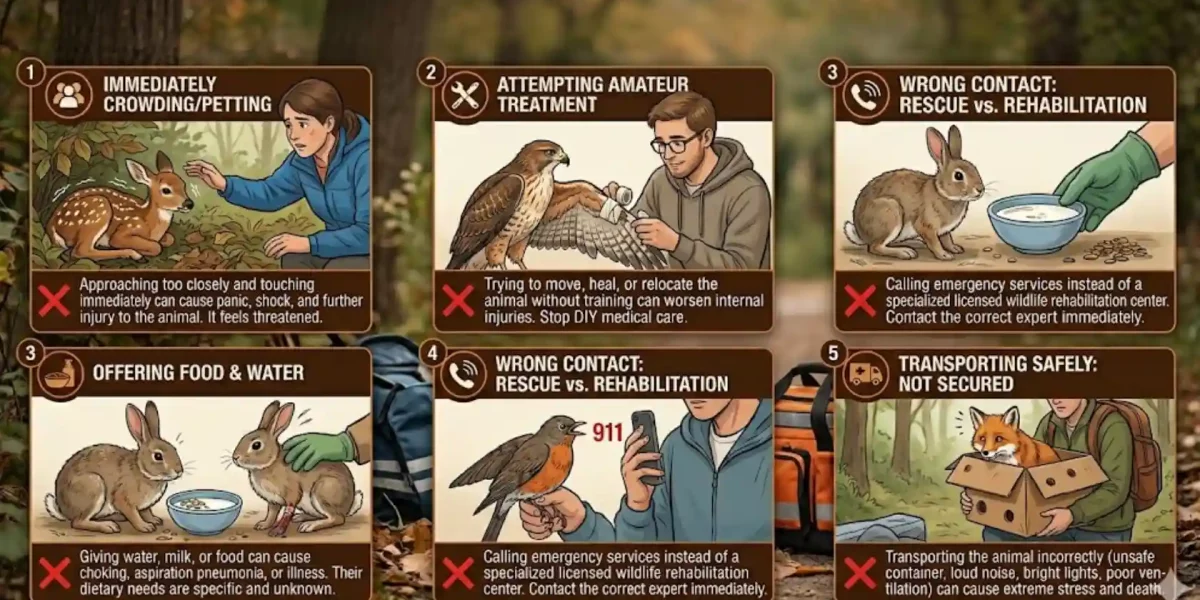
Common Mistakes People Make Around Injured Animals
A dog is lying at the edge of a Delhi flyover, one leg twisted under it, eyes wide. A crowd gathers. Someone pours water near its mouth. Two boys try to lift it by the legs. A third reaches to pet its head, and the dog snaps. Within ten minutes, three well-meaning people have made three of the most common mistakes around injured animals — and the dog is more frightened, more hurt, and no closer to a vet.
At Kannan Animal Welfare (KAW), our 24×7 rescue helpline takes calls like this every single day across Delhi-NCR. The callers are kind people. They stopped. They cared. That instinct is exactly what saves lives. But good intentions and good handling are not the same thing, and the gap between them is where injured strays get hurt worse. This guide walks through the mistakes we see most often around injured animals — and, more importantly, what to do instead.
The most useful thing you can do for an injured stray dog is rarely what your hands want to do first. It is to pause, keep the animal safe and still, and call people trained to help. Everything below builds on that single idea.
Why Good Intentions Go Wrong With Injured Animals
An injured animal is not behaving like the friendly stray you feed every morning. It is in pain, terrified, and running on pure survival instinct. An otherwise gentle dog can bite reflexively when it hurts, and a cornered animal that cannot flee will often choose to fight. The animal is not difficult. It is being a frightened creature that does not understand you are trying to help.
This matters in India more than almost anywhere. Roughly 9.1 million animal bites occur in the country every year, according to an ICMR-NIE survey across 60 districts, and an ICMR-linked study estimates around 5,726 human rabies deaths annually. Dogs are involved in about 99% of rabies fatalities here. So the stakes around handling injured animals are not only the animal’s welfare — they are your own safety too. Both are protected by the same thing: calm, correct handling instead of panic.
Mistake 1: Moving a Spinal-Injury Animal the Wrong Way
This is the mistake that does the most permanent damage. A dog hit by a car or fallen from a height may have a spinal injury, and the wrong lift can turn a treatable injury into lifelong paralysis.
The warning signs of a possible spinal injury are specific: the animal cannot move its back legs, drags itself, cries out sharply when its head or torso shifts, or has visible difficulty breathing. If you see any of these, do not scoop the dog up in your arms and do not let anyone lift it by the legs.
What to do instead: keep the animal as still as you possibly can. Slide a flat rigid surface underneath it — a wooden board, a stiff piece of cardboard, a car parcel shelf for a large dog — and move the whole body as one unit, keeping the head and neck in line with the spine. Support the body, never just the limbs or the scruff. Then call a rescue team or vet before moving it any further than necessary. This is precisely the kind of careful, low-stress transport KAW’s rescue operations are built around, because the journey to the clinic can either protect a spine or destroy it.
Mistake 2: Pouring Milk or Water Into an Unconscious or Badly Hurt Animal
It feels like mercy. It can be fatal. People constantly try to pour water — or that old Indian reflex, milk — into the mouth of an animal that is unconscious, semi-conscious, or seriously injured. An animal that cannot swallow properly can inhale the liquid into its lungs, and aspiration pneumonia is a severe, sometimes fatal complication.
There is a second reason to hold back. A badly injured animal often needs sedation or emergency surgery within the hour, and vets withhold food before anesthesia specifically because a full stomach raises the risk of the animal vomiting and aspirating under sedation. By feeding it, you may delay the very surgery that could save it.
What to do instead: offer nothing by mouth to an animal that is unconscious, dazed, struggling to breathe, or visibly critical. A small bowl of water set near a fully alert, calm animal that chooses to drink on its own is fine. Forcing anything in is not. When in doubt, leave the feeding decision to the vet.
Mistake 3: Cornering or Crowding a Scared, Painful Animal
A ring of people leaning in, phones out, hands reaching — from the animal’s point of view, that is a pack of predators closing in while it cannot escape. Bites are most likely when an animal is in pain, highly aroused, or has had its earlier warning signals ignored. The growl, the lip curl, the stiff freeze: those are requests for space, not invitations to push closer.
What to do instead: disperse the crowd. Ask onlookers to step back and stay quiet. Approach slowly from the side rather than head-on, keep your body turned slightly away, and avoid direct staring, which animals read as a threat. Speak low. Give the animal a clear escape route so it never feels trapped. If it keeps warning you, stop and wait for trained rescuers. A scared animal that is given room calms far faster than one that is surrounded.
Mistake 4: Skipping Rabies Precautions
Compassion can make people careless. They handle a bleeding stray bare-handed, take a scratch or a nip, wipe it on their kurta, and carry on. In a country where stray dogs account for roughly 80% of bite cases and rabies is almost always fatal once symptoms appear, that is a dangerous gamble.
What to do instead: protect yourself first — you cannot help an animal if you are bitten. Use thick gloves, a towel, or a blanket as a barrier when handling. If you are bitten or scratched, the single most effective step is to wash the wound immediately and thoroughly with soap and running water for about 15 minutes; the WHO calls this the most effective measure to prevent rabies. Then go to a hospital or clinic the same day for post-exposure vaccination. Because an unknown stray cannot be observed for rabies, doctors treat such bites as high-risk and begin the full course. Do not wait to “see if it gets worse.”
Mistake 5: Delaying the Helpline (or Trying to DIY the Treatment)
The two final mistakes are really one habit: trying to handle everything yourself instead of getting professionals involved early. Some people spend an hour applying turmeric, Dettol, or kitchen-cabinet ointments to a maggot wound. Others decide they will “watch the dog overnight and call tomorrow.” With a critically injured stray, an hour can be the difference between a leg saved and a leg amputated.
KAW has seen both ends of that timeline. Adobe came to us paralysed, with an infection so deep in his leg that amputation was the only way to save his life; today he thrives on three legs. The leader arrived with a severe maggot-infested wound, too weak to stand. Both survived because they reached trained medical care — not because anyone treated them on the street.
What to do instead: call the rescue helpline early and let it guide you. When you reach KAW’s 24×7 helpline at +91-9999670042, our team assesses the case, tells you exactly what to do (and what not to do) while you wait, and arranges safe transport to our facility or a partner veterinary hospital. You do not need to know animal first aid. You need to keep the animal safe, keep yourself safe, and make the call. The expertise is on the other end of the line.
Injured Animals: Do and Don’t at a Glance
Situation | Don’t | Do
Possible spinal injury | Don’t lift by legs or scoop in arms | Slide a board under the body, move it as one unit, keep head and spine in line
Unconscious or critical animal | Don’t pour milk or water into its mouth | Offer nothing by mouth; let the vet decide on food and fluids
Scared, painful animal | Don’t crowd, corner, or stare it down | Clear the crowd, approach from the side, leave an escape route
Risk of bites | Don’t handle a stray bare-handed | Use gloves, a towel, or a blanket as a barrier
If you are bitten or scratched | Don’t ignore it or just wipe it off | Wash with soap and water for 15 minutes; get anti-rabies care the same day
A critically hurt stray | Don’t DIY treatment or wait until tomorrow | Call the rescue helpline early and follow their instructions
How KAW’s Rescue Helpline Actually Works
Knowing what happens after you call removes the hesitation that costs animals time. KAW’s rescue workflow is built to take the pressure off the bystander.
It starts with your call or WhatsApp message to +91-9999670042. Our team treats every report as time-critical and responds with urgency. We ask you a few quick questions to assess the animal’s condition from a distance — Can it walk? Is it bleeding heavily? Is it conscious? — and we guide you on keeping it safe and still until help arrives. Our trained rescuers handle the actual capture and transport, moving the animal with minimal stress to our facility in Kapashera or to a veterinary hospital. From there, vets take over with examination, surgery if needed, medication, and the long work of healing and rehabilitation. You can read more about each stage on KAW’s rescue operations page.
Your job in that chain is the first link, and it is the one only you can do: spot the animal, keep it and yourself safe, and report it. We handle the rest.
FAQs
Keep calm and keep the animal still and safe without crowding it. Do not move it more than necessary, do not give it food or water, and call a rescue helpline such as KAW at +91-9999670042 for guidance before attempting any handling.
Not if the animal is unconscious, dazed, struggling to breathe, or critically hurt, because it can inhale the liquid into its lungs. A calm, fully alert animal may drink on its own from a bowl placed nearby, but never force liquid into an injured animal’s mouth.
Do not lift it by its legs or scoop it into your arms. Slide a flat rigid surface like a board or stiff cardboard under its whole body, keep the head and neck in line with the spine, and move it as a single unit. Better still, wait for trained rescuers.
Wash the wound immediately and thoroughly with soap and running water for about 15 minutes, then go to a hospital the same day to begin post-exposure rabies vaccination. Because a stray cannot be observed, doctors treat such bites as high-risk and start the full course.
For anything beyond gently keeping the animal calm, no. DIY treatment with home remedies can worsen wounds and delay professional care that the animal urgently needs. Contact a rescue organisation or vet quickly and follow their instructions.
If you remember one thing from this guide, make it this: around an injured animal, the smartest, kindest move is almost always to do less with your hands and more with your phone. Keep the animal still, keep yourself safe from bites and rabies, and bring in people who do this every day. The mistakes above all come from the same loving impulse to fix things immediately — and they all get safer the moment a trained rescuer is on the case.
The next time you find an injured animal in Delhi-NCR, you do not need to be a vet. You need to be the person who made the call. Report a case on WhatsApp to KAW’s 24×7 helpline at +91-9999670042, and let our rescue team take it from there.